


Share article
#TrevorDiscover Gwangjang Market Seoul’s Must-Try Korean Street Food and Local Tips

Trevor
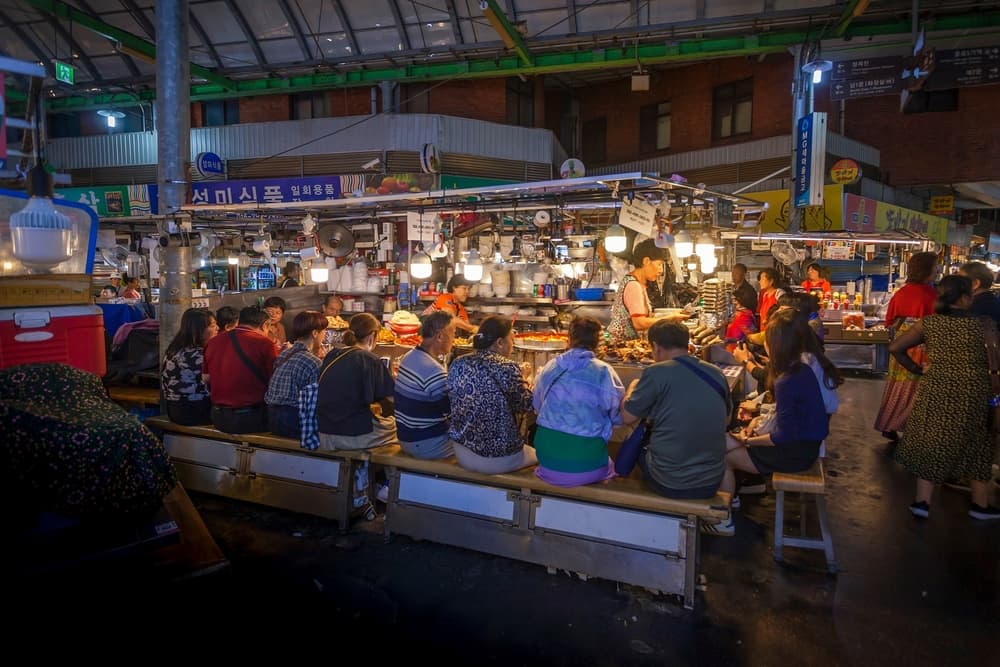
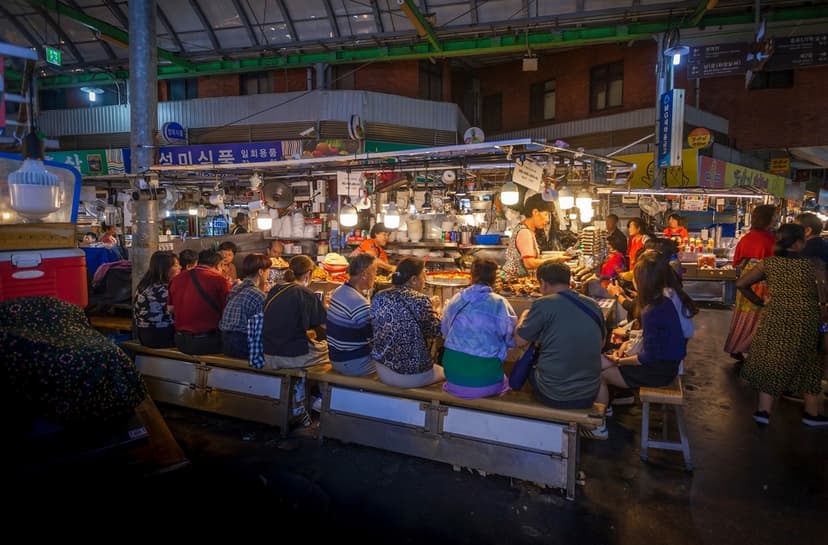
Ready to discover one of Seoul’s most famous food destinations? Trevor is taking you to Gwangjang Market, a traditional market where sizzling mung bean pancakes, bite-sized rice rolls and bustling food counters create an unforgettable Korean street-food experience. Beyond the dishes that have made the market famous, there are noodles to slurp, sweet snacks to try and shopping lanes worth exploring. Follow Trevor’s tips to plan your visit, find local favorites, understand the opening hours and decide what to eat first.
Good to Know Before You Go
Gwangjang Market Overview | Details |
Location | 88 Changgyeonggung-ro, Jongno-gu, Seoul, South Korea |
Nearest subway station | Jongno 5-ga Station (Line 1), with Euljiro 4-ga Station (Lines 2 and 5) as another option |
General market hours | Commonly listed as 9 AM–6 PM |
Food alley hours | Commonly listed as 9 AM–11 PM |
General shopping areas | Many shops operate during the day, with schedules varying by section |
Closed days | Many general shops close on Sundays; the food alley generally operates daily |
Admission | Free to enter |
Suggested visit duration | 1–2 hours for food, longer if shopping |
Best time to visit | Late morning for a food-focused visit or evening for a lively atmosphere |
Famous for | Bindaetteok, mayak gimbap, yukhoe, traditional market food and textile shopping |
Opening hours can vary by section and individual vendor, so check the schedule of any specific stall or shop before visiting.
Why is Gwangjang Market Famous?
Gwangjang Market is one of Seoul’s best-known traditional markets, with a history dating back to 1905. It has become a popular destination for travelers who want to experience Korean food culture in a busy, traditional market setting.
The food alley is a major attraction. Visitors can sit at counters, watch vendors prepare dishes and sample several Korean specialties in one visit. The market is especially associated with bindaetteok, mayak gimbap and yukhoe, although its food selection extends to noodles, rice dishes, soups and sweet snacks.
Gwangjang Market is also known for its textile and clothing businesses. Beyond the food stalls, visitors can browse fabric, sewing materials, traditional clothing-related products and selected vintage finds.
Trevor’s tip: Leave some room in your itinerary to explore beyond the first row of food counters. The market is more than a place to eat, and a little browsing can reveal a different side of Seoul’s traditional shopping culture.
What is the Best Time to Go to Gwangjang Market?
The best time to visit depends on what you want from the experience. Late morning can be a practical choice for exploring the food stalls before the busiest lunch period, while evening is ideal for visitors who want to see the market at its liveliest.
Late Morning: Explore Before the Lunch Rush
Arriving in the late morning gives you time to look at menus, compare stalls and decide what to order before the crowds build. It can also be convenient if you want to visit nearby attractions later in the day.
Lunchtime: Try the Famous Food Stalls
Lunch is a popular time to visit, and the food alley can become crowded. This is a good opportunity to try several signature dishes, but be prepared for queues and limited counter seating at busy stalls.
Afternoon: Combine Food and Shopping
If shopping is part of your plan, an afternoon visit gives you time to explore the market’s retail areas as well as its food stalls. Check individual shop hours, since general shopping sections may close earlier than the food alley.
Evening: Experience Gwangjang Market at Night
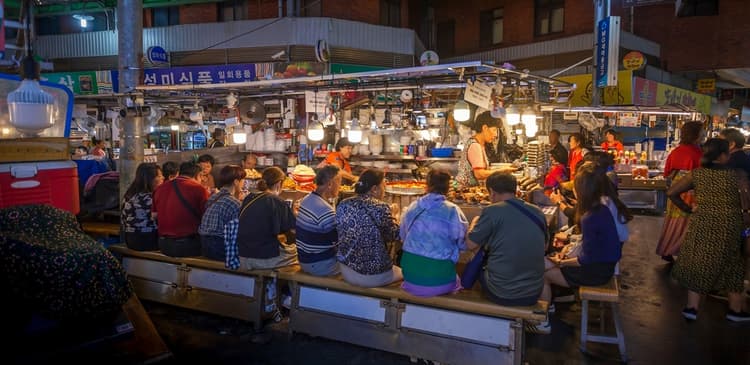
Gwangjang Market at night offers a lively atmosphere, with diners gathering around food counters and vendors preparing hot dishes. It is a good time to enjoy bindaetteok, tteokbokki, noodle dishes and other market favorites.
Trevor’s tip: For a balanced visit, arrive in the late afternoon, sample a few dishes and stay into the evening. This gives you a chance to explore the market before experiencing its dinner atmosphere.
Gwangjang Market Opening Hours: Which Day is It Closed?
Gwangjang Market does not operate on one uniform schedule. The general shopping areas, textile businesses and food alley can have different opening hours and closing days.
The general market is commonly listed as open from around 9 AM to 6 PM, while the food alley is commonly listed as operating from around 9 AM to 11 PM. These are general schedules rather than guaranteed hours for every vendor.
Many general shops close on Sundays, but the food alley generally remains open. Individual stalls may also have their own rest days, so a specific dish may not be available every day.
Before visiting, keep these points in mind:
- For food: Check the food alley’s schedule and the hours of any specific restaurant or stall.
- For shopping: Visit during the day, especially if you want to browse textiles and clothing.
- For Sunday visits: The food alley is generally a better option than relying on all retail shops being open.
- For late-night visits: Do not assume every food stall stays open until the published closing time.
Trevor’s tip: If you are visiting mainly for a particular dish, plan around the vendor rather than the market’s overall hours.
Must-Eat Foods at Gwangjang Market
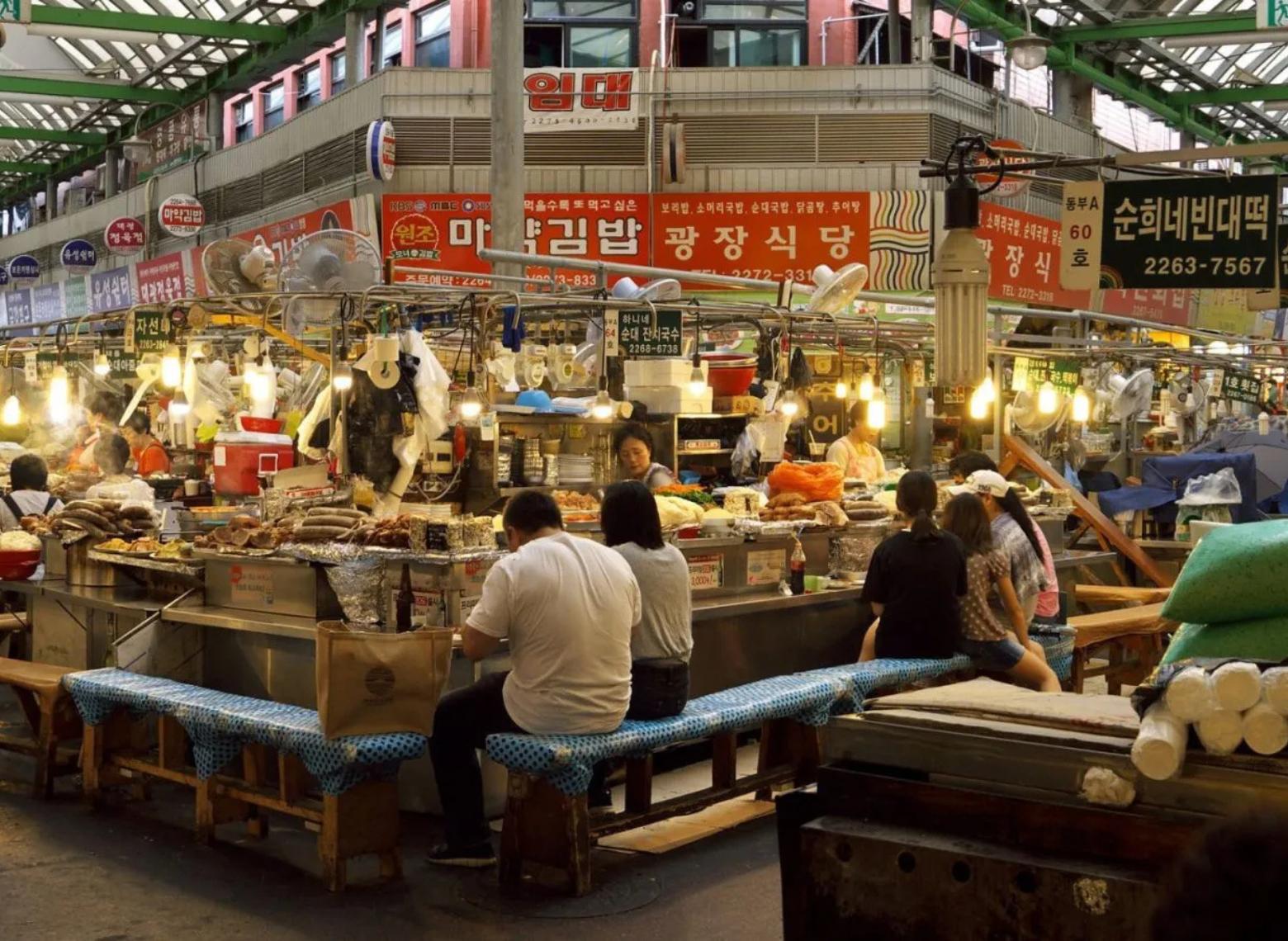
Gwangjang Market is famous for its traditional Korean food, but deciding what to eat can be challenging when so many stalls are packed into the same area. Trevor recommends starting with the market’s signature dishes before branching out to noodles, soups and sweet treats.
1. Gwangjang Market Bindaetteok
Bindaetteok is one of the dishes most closely associated with Gwangjang Market. These savory mung bean pancakes are cooked on large griddles until the outside turns crisp while the inside remains soft.
The pancakes are often served with a dipping sauce and make a satisfying snack or shared dish. Watching them sizzle on the griddle is also part of the experience.
Trevor’s tip: Eat bindaetteok while it is still hot to enjoy the contrast between its crisp exterior and softer center. Consider sharing one if you plan to try several other dishes.
2. Gwangjang Market Mayak Gimbap
Mayak gimbap consists of small seaweed rice rolls filled with simple ingredients, often including vegetables. They are usually served with a mustard-based dipping sauce that adds a sharp, slightly spicy flavor.
The word “mayak” means “drug” in Korean, but the nickname refers to how moreish these little rolls are, not to their ingredients. Their small size makes them easy to share and convenient to eat between other dishes.
Trevor’s tip: Try them with bindaetteok for a classic combination of savory pancakes and bite-sized rice rolls.
3. Gwangjang Market Yukhoe
Yukhoe is Korean-style seasoned raw beef, commonly served with Asian pear and egg yolk. The dish combines tender beef with a savory seasoning and a hint of sweetness from the pear.
It is one of the market’s best-known specialties, particularly for visitors interested in traditional Korean preparations of beef. Some restaurants also serve yukhoe bibimbap, which combines seasoned raw beef with rice and other ingredients.
Because yukhoe contains raw beef, it is not suitable for everyone. Choose another dish if you prefer cooked meat, and take extra care with food safety if raw meat is not part of your usual diet.
Trevor’s tip: Check the menu carefully before ordering, especially if you are dining with someone who prefers cooked dishes.
4. Modum-Jeon: Assorted Korean Pancakes
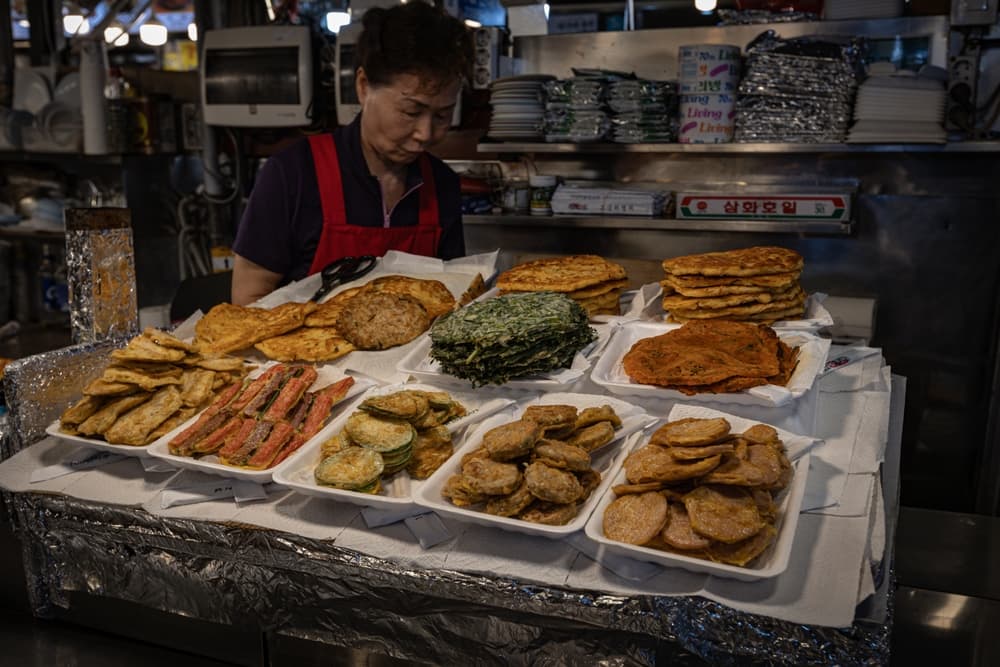
Jeon refers to Korean savory pancakes and battered or pan-fried ingredients. Depending on the stall, you may find options made with vegetables, kimchi, fish or other ingredients.
An assortment of jeon is a good choice when you want to sample several flavors without committing to a single large dish. The pieces are easy to share, making them suitable for a group food stop.
Trevor’s tip: Look at the displayed selection and ask about the ingredients before ordering. Some varieties may contain seafood or meat.
5. Sundae and Sundae-Guk
Sundae is a Korean blood sausage traditionally made with ingredients such as glass noodles and other fillings. It may be served sliced on a plate or as part of a larger meal.
Sundae-guk is a soup featuring sundae and other ingredients in a savory broth. It can be a filling option for visitors who want something warmer and more substantial than street snacks.
Trevor’s tip: Sundae has a distinctive texture and ingredients that may be unfamiliar to first-time visitors. If you are curious but unsure, start with a small portion.
6. Gwangjang Market Kalguksu
Kalguksu is a Korean noodle dish made with knife-cut wheat noodles served in broth. It is a comforting choice for a full meal, particularly on cooler days or after spending time walking around Seoul.
Broth styles and toppings differ by restaurant, so look at the menu to see what each stall offers. Some versions are simple and light, while others are more substantial.
Trevor’s tip: If you have already tried several fried snacks, a bowl of kalguksu can round out the meal with something warm and filling.
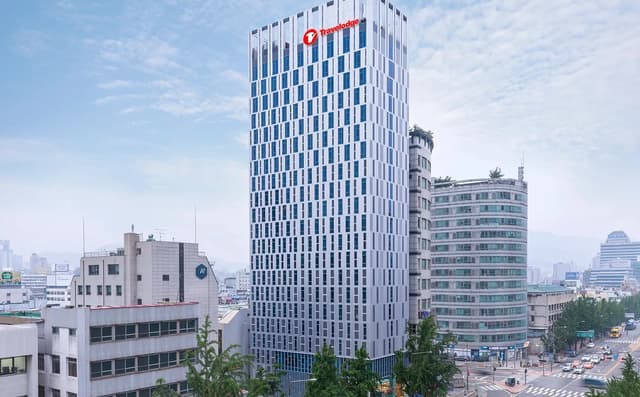
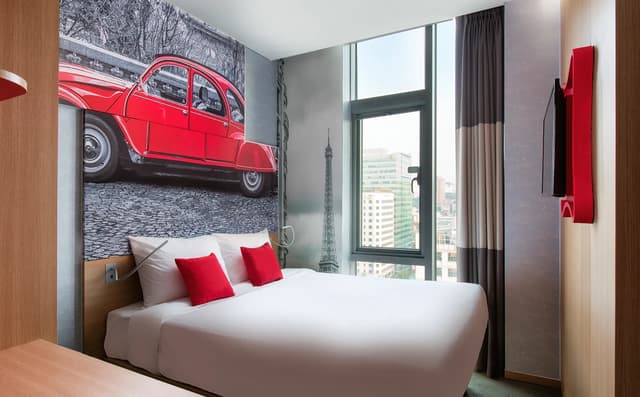
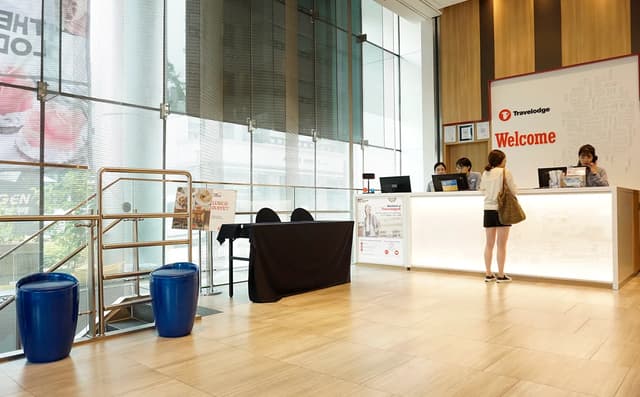
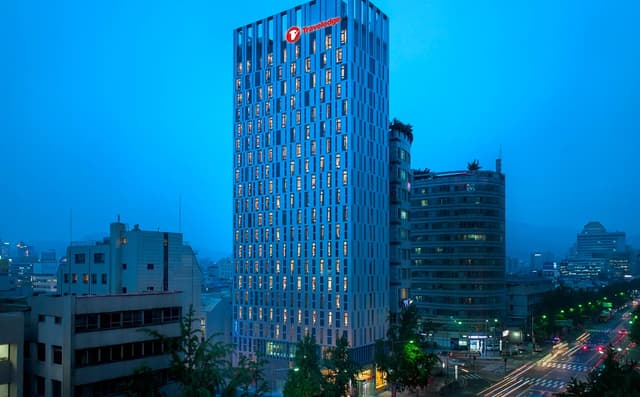
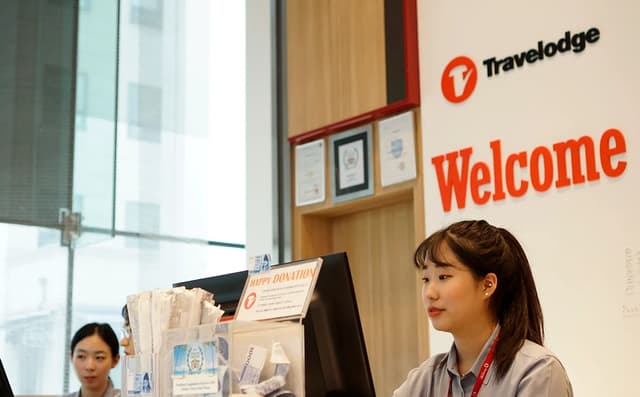
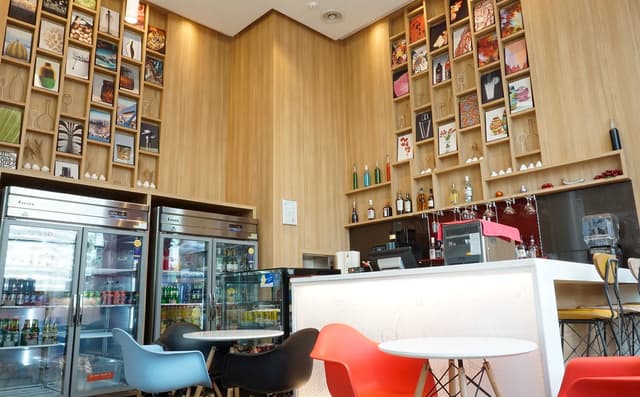
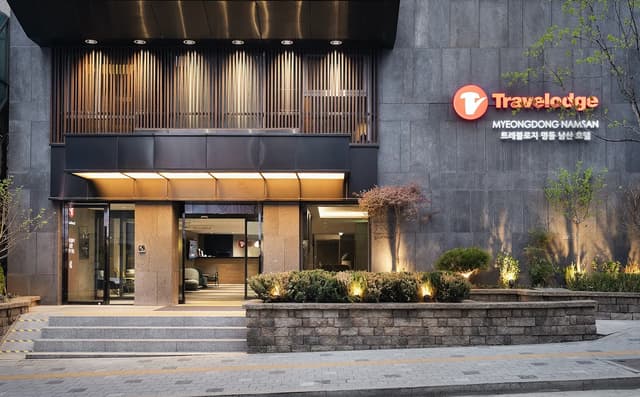
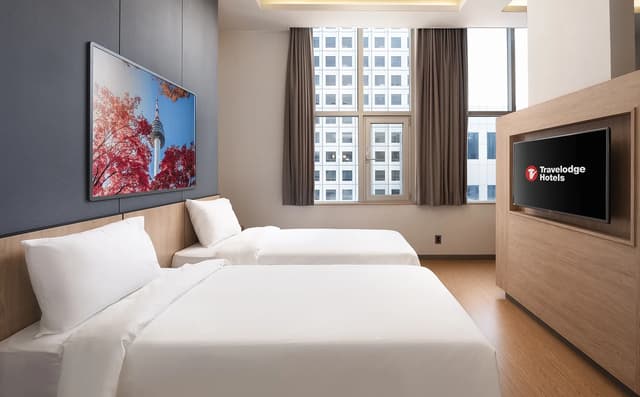
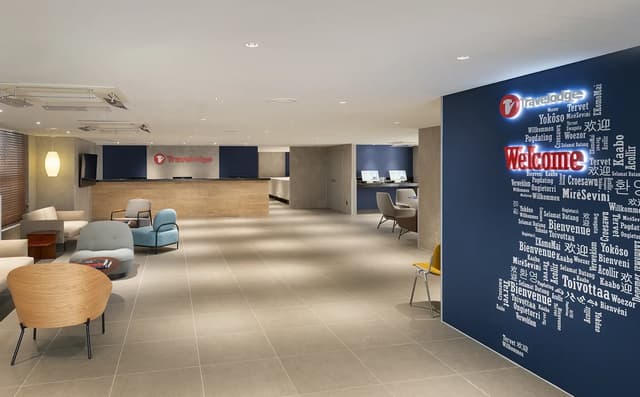
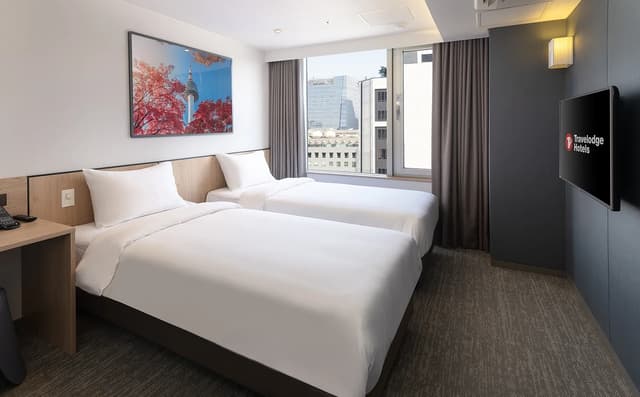
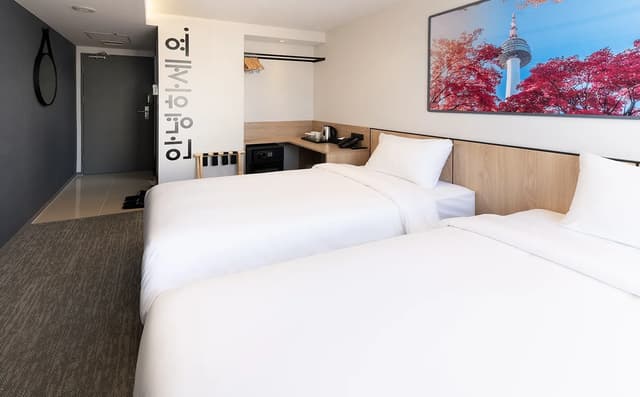
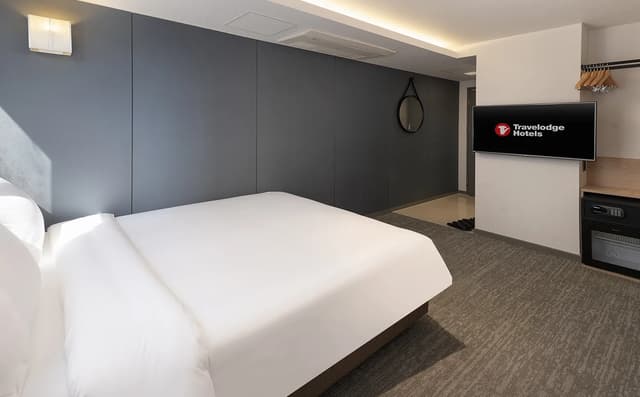
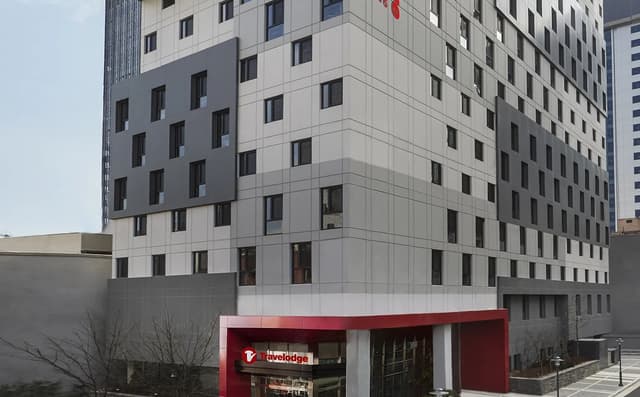
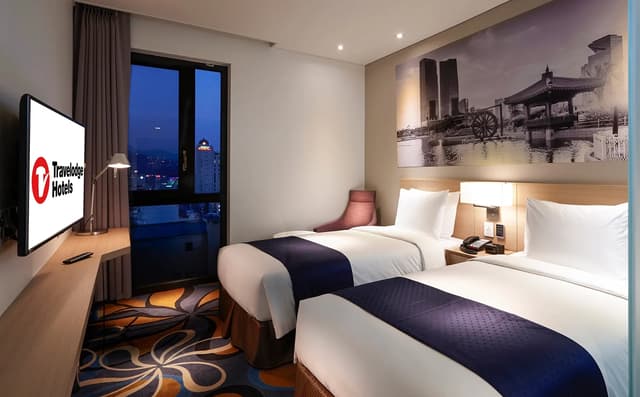
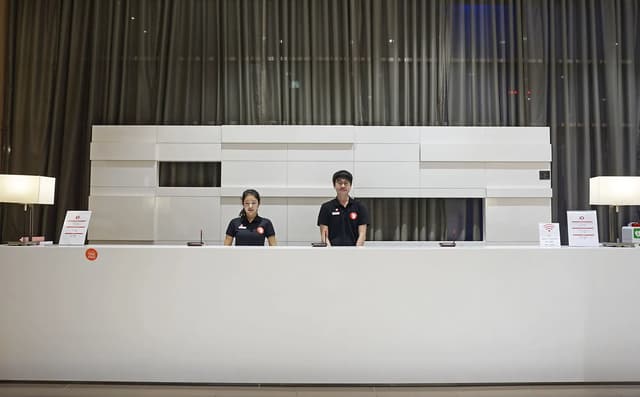
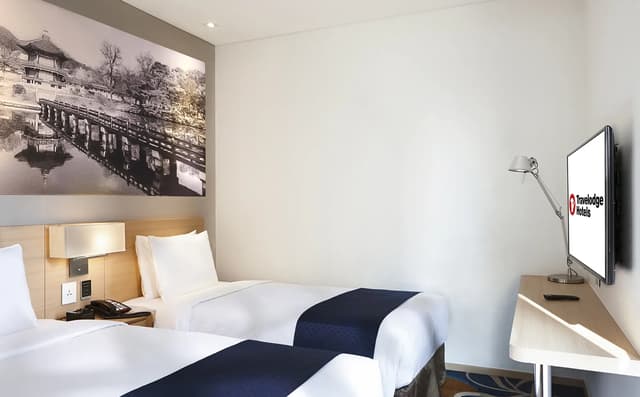
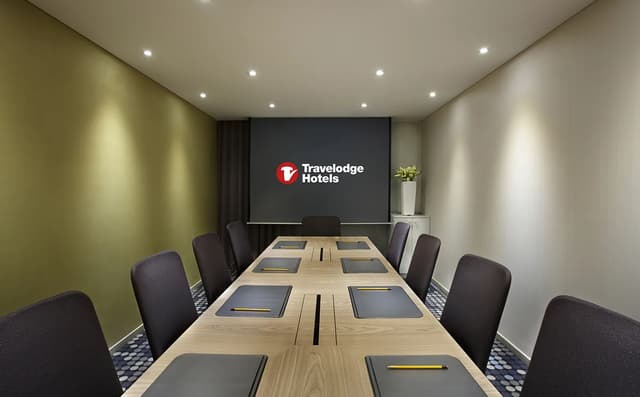
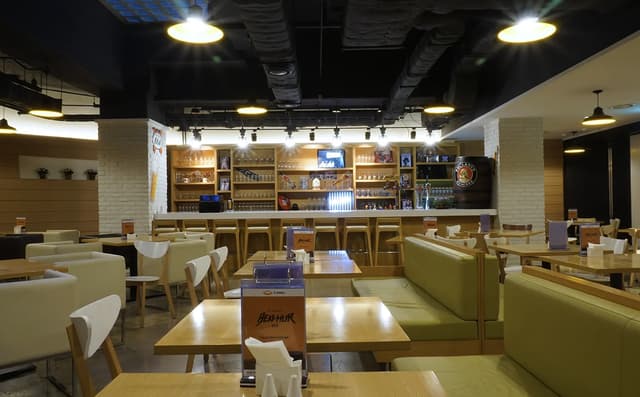
Travelodge Hotel Gwangjang Market



- 1
- 2
7. Janchi Guksu
Janchi guksu is a noodle dish usually served in a light broth with simple toppings. Compared with richer or fried foods, it can be a more delicate option for visitors looking for a straightforward noodle meal.
The ingredients and availability depend on the vendor, so it may not be offered at every food counter.
Trevor’s tip: Consider janchi guksu if you want a noodle dish that feels lighter after sampling several richer market specialties.
8. Gwangjang Market Tteokbokki
Tteokbokki is a popular Korean street food made with chewy rice cakes coated in a sweet-spicy sauce. It is often sold alongside other familiar snacks, making it easy to add to a shared order.
The sauce can range from mildly sweet to quite spicy, depending on the stall. Some versions also include fish cakes or other additions.
Trevor’s tip: If you are sensitive to spice, ask about the sauce before ordering. Pair tteokbokki with a milder dish or warm soup for variety.
9. Eomukguk
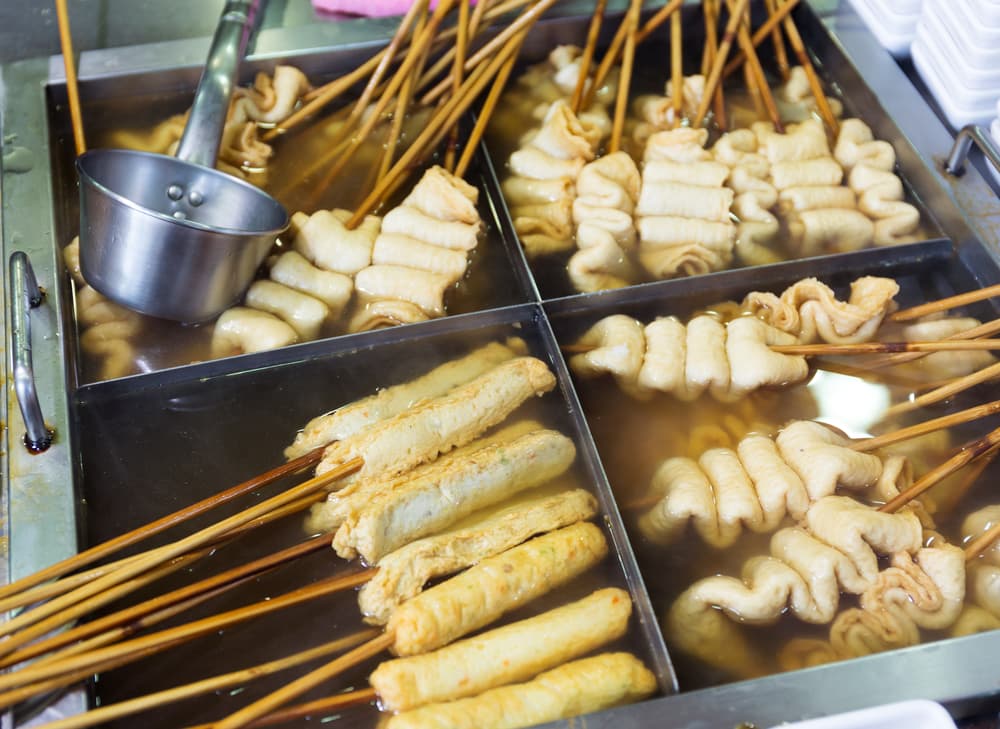
Eomukguk consists of Korean fish cakes served in a warm, savory broth. Fish cakes may be served on skewers, making this an easy snack to enjoy while exploring the market.
The broth is often simple and comforting, and the dish works well alongside fried pancakes or spicy rice cakes.
Trevor’s tip: Keep eomukguk in mind for a quick warm-up during cooler weather or an evening visit.
10. Boribap
Boribap is a barley rice dish that is commonly served with vegetables and seasonings. Depending on the preparation, diners may mix the ingredients together and add a sauce to suit their taste.
It offers a more rice-focused alternative to the market’s fried snacks and can be a practical option if you want a fuller meal.
Trevor’s tip: Ask what vegetables and seasonings are included, especially if you have dietary restrictions or prefer a milder flavor.
11. Yukhoe Bibimbap
Yukhoe bibimbap combines rice, vegetables and seasoned raw beef. It brings together elements of the popular Korean mixed-rice dish and the market’s well-known yukhoe specialty.
Availability varies by restaurant, so check the menu before planning your visit around it. As with regular yukhoe, the beef is raw unless the vendor specifically offers a cooked alternative.
Trevor’s tip: If you are interested in trying yukhoe but want a complete rice meal, look for a restaurant that serves yukhoe bibimbap.
12. Seafood
Seafood options vary between vendors, and some stalls may offer raw seafood while others focus on cooked dishes. Rather than assuming that every seafood item is a signature Gwangjang Market specialty, check the displayed menu and ask how each dish is prepared.
Look for clear pricing and pay attention to freshness and food handling, particularly when ordering raw seafood.
Trevor’s tip: If you are unsure what a seafood dish contains, ask before ordering. This is especially important if you have allergies or dietary restrictions.
13. Kkwabaegi: Korean Twisted Doughnuts
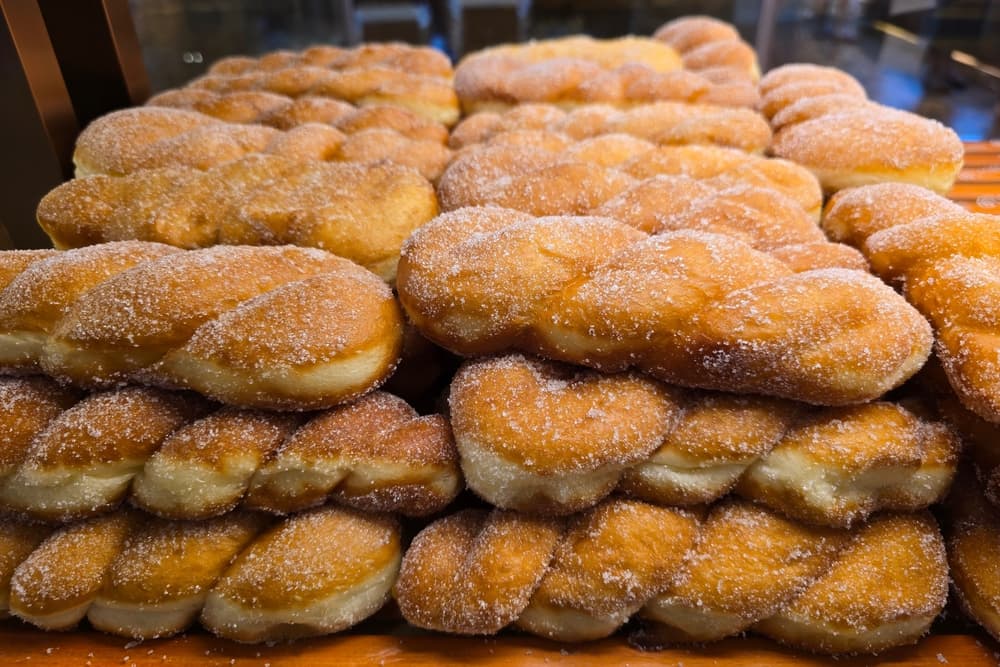
Kkwabaegi are twisted Korean doughnuts, often made with glutinous rice flour and coated in sugar. They have a lightly crisp exterior and a chewy texture that makes them different from many Western-style doughnuts.
They are a popular sweet snack and a good way to finish a food-focused visit without ordering another full meal.
Trevor’s tip: Look for a freshly prepared doughnut and enjoy it while it is still warm.
14. Hotteok
Hotteok is a Korean sweet pancake often filled with a mixture of sugar, cinnamon and nuts, although recipes vary. The outside is pan-fried while the filling becomes warm and sweet.
Availability depends on the stall and season, but it is worth looking out for if you enjoy Korean desserts.
Trevor’s tip: Let the filling cool slightly before taking a bite, as the inside can be much hotter than the outside.
What Should You Try First at Gwangjang Market?
If you are short on time or do not want to order too much, use this table to plan your first few dishes.
If You Want… | Try… |
A famous market specialty | Bindaetteok |
A small snack to share | Mayak gimbap |
A traditional raw beef dish | Yukhoe |
Several savory flavors | Modum-jeon |
A hearty meal | Kalguksu or sundae-guk |
Something spicy and chewy | Tteokbokki |
A warm, simple snack | Eomukguk |
A sweet finish | Kkwabaegi or hotteok |
Trevor’s tip: Avoid ordering a full portion of everything at the first stall. Share a few dishes, compare flavors and leave room for something you discover along the way.
What to Expect at Gwangjang Market Food Stalls
The food stalls are a central part of the Gwangjang Market experience. Many have counter seating where diners can watch food being prepared, order directly from the vendor and enjoy their meal close to the action.
How Ordering Works
Look at the menu or displayed dishes, decide what you want and confirm the price and portion size before ordering. At busy counters, seating may be limited, and diners are generally expected to make room for others once they have finished.
How to Choose a Stall
Start by identifying the dishes you want to try, then compare the available menus. A long queue can indicate a popular stall, but it is not the only factor to consider. Clear pricing, food handling and whether the dish suits your preferences are also important.
How Much Time Should You Allow?
Around one to two hours is a reasonable starting point for a food-focused visit. Allow more time if you plan to sample multiple dishes, visit during busy lunch or dinner periods, or explore the market’s shopping areas.
Payment and Dining Etiquette
Keep a backup payment option available and confirm prices before ordering. If seating is shared or limited, be considerate of other diners and avoid occupying a counter for longer than necessary during busy periods.
Food Preferences and Dietary Needs
Some dishes contain meat, seafood, gluten or other common allergens. Yukhoe is made with raw beef, while sundae may contain blood and other animal-derived ingredients. Ask the vendor about ingredients and preparation if you have allergies, dietary restrictions or specific food preferences.
Trevor’s tip: Choose a few must-try dishes before arriving, but stay flexible. The best way to enjoy Gwangjang Market is to explore at a comfortable pace rather than trying to eat everything in one visit.
What is Gwangjang Market Like at Night?
Gwangjang Market at night is a popular stop for dinner and Korean street food. The food alley can remain active into the evening, with diners gathering at counters and vendors preparing pancakes, noodles, rice cakes and other familiar dishes.
An evening visit is particularly appealing if you want to experience the market’s atmosphere rather than focus on shopping. Bindaetteok, eomukguk, tteokbokki and noodle dishes are all worth looking for, depending on the stalls operating that day.
However, not every section stays open late. Textile and general shopping businesses may close earlier than food vendors, and individual food stalls may finish service before the published food-alley closing time.
Trevor’s tip: If you want to eat and shop, arrive during the afternoon. If food and atmosphere are your priorities, an evening visit may be a better fit.
What to Buy at Gwangjang Market
Gwangjang Market is also known for its textile and clothing businesses, giving visitors another reason to explore beyond the food alley.
Fabric and Textiles
The market has a longstanding association with textiles and sewing materials. Visitors interested in fabric can browse different shops and compare materials, patterns and prices.
Hanbok and Traditional Clothing Materials
Some market businesses specialize in traditional clothing and related materials. These shops may appeal to visitors interested in Korean dress, textile craftsmanship or souvenirs connected to traditional culture.
Vintage Clothing
Selected shopping areas offer secondhand and vintage clothing. The selection varies, so browsing several shops can help you compare styles, condition and prices.
Household Items and Bedding
Depending on the shop, visitors may find practical household products, bedding and other everyday goods. These items can be useful purchases, although bulky goods may be less convenient to carry during a sightseeing day.
How to Shop Smart
- Compare prices and quality before buying.
- Check garment sizes, fabric condition and product details.
- Ask about payment methods and exchange policies before completing a purchase.
- Consider luggage space before buying large or heavy items.
- Visit during daytime hours if shopping is a major part of your plan.
Trevor’s tip: Food stalls and general shopping businesses do not necessarily follow the same schedules. Visit earlier in the day if you want time for both.
Is It Worth Going to Gwangjang Market?
Yes, Gwangjang Market is worth visiting if you want to sample Korean street food, explore a traditional market and experience a busy part of Seoul’s food culture. Its signature dishes, including bindaetteok, mayak gimbap and yukhoe, make it a particularly appealing stop for food lovers.
The market is also useful for travelers who want to try several different dishes without traveling between separate restaurants. Beyond eating, its textile and clothing shops offer a glimpse of the market’s broader commercial history.
However, the experience can be crowded, especially around lunch and dinner. Counter seating may be limited, and the food alley can feel busy for visitors who prefer quiet dining or spacious restaurants.
To make the most of your visit, arrive with a short list of dishes to try, check the hours of any specific stall you have in mind and leave time to browse. If you have a little longer, combine Gwangjang Market with nearby destinations such as Dongdaemun Design Plaza or Cheonggyecheon Stream.
Trevor’s recommendation: Come hungry, share a few dishes and explore beyond the first counter that catches your eye. That way, the visit becomes more than a meal—it becomes a chance to discover another side of Seoul.
How to Get to Gwangjang Market
Gwangjang Market is in central Seoul and can be reached by subway, taxi or bus. The subway is a practical option for visitors combining the market with other sightseeing stops.
By Subway
Jongno 5-ga Station on Line 1 is a convenient station for reaching the market, with Exit 8 commonly used for access. Euljiro 4-ga Station, served by Lines 2 and 5, is another option depending on your starting point and which part of the market you want to visit.
By Taxi
You can show the driver the Korean name 광장시장 or the market’s street address. Allow extra time during busy traffic periods.
Trevor’s Navigation Tip
Use the station exit that best matches your first stop. If you are visiting for food, follow signs toward the food alley; if shopping is your priority, check the location of the relevant retail section before setting off.
Stay Conveniently Connected With Travelodge
Gwangjang Market is easy to add to a Seoul itinerary when staying at Travelodge Myeongdong Namsan, Travelodge Myeongdong Euljiro or Travelodge Dongdaemun. Each property offers convenient access to central Seoul’s public transportation network, making it easier to reach the market for a food-focused outing.
Travelodge Dongdaemun places the guests only 5-minute walks, whereas from Travelodge Myeongdong Namsan and Travelodge Myeongdong Euljiro, visitors can generally plan for around 10 minutes by public transportation to reach the Gwangjang Market area.
Travelodge makes a practical base for exploring Seoul, combining Comfort for a place to recharge, Convenience for reaching key attractions and Connectivity through access to the city’s subway network. After sampling bindaetteok, mayak gimbap and other market favorites, continue exploring nearby destinations such as Dongdaemun Design Plaza or Cheonggyecheon Stream.
For a convenient Seoul stay, explore Travelodge Myeongdong Namsan, Travelodge Myeongdong Euljiro or Travelodge Dongdaemun and book directly through the official Travelodge website.
FAQs About Gwangjang Market
What is Gwangjang Market Famous For?
Gwangjang Market is famous for Korean street food, particularly bindaetteok, mayak gimbap and yukhoe. It is also known for its textile and clothing businesses.
What is the closest Travelodge hotel from Gwangjang Market?
Travelodge Dongdaemun is only a 5-minute walk away from the market. Other hotels like Travelodge Myeongdong Namsan and Travelodge Myeongdong Euljiro offer an easy access to the market by public transportation around 10 minutes journey.
What is the Best Time to Visit Gwangjang Market?
Late morning is a practical time to explore before the lunch rush, while evening is ideal for experiencing the busy food alley. Visit during the day if you also want to browse general shopping areas.
What are Gwangjang Market’s Opening Hours?
The general market is commonly listed as open from around 9 AM to 6 PM, while the food alley is commonly listed as operating from around 9 AM to 11 PM. Hours vary by section and vendor.
Which Day is Gwangjang Market Closed?
Many general shops close on Sundays, while the food alley generally remains open. Individual vendors may have different closing days, so check ahead if you want to visit a specific stall.
What Food Should I Try at Gwangjang Market?
Start with bindaetteok, mayak gimbap and yukhoe, three of the market’s best-known specialties. Kalguksu, tteokbokki, eomukguk and kkwabaegi are other options worth looking for.
Is Gwangjang Market Open at Night?
Yes, the food alley generally operates into the evening, making it a popular place for dinner and street food. General shopping areas may close earlier, and individual stall hours can vary.
How Do I Get to Gwangjang Market by Subway?
Jongno 5-ga Station on Line 1 is a convenient option, with Exit 8 commonly used to reach the market. Euljiro 4-ga Station on Lines 2 and 5 is another option depending on your route.
Share article
Our hotel
Never Miss an Update!
Join our newsletter to unlock travel tips, latest promotions, and updates.
Subscribe now