


Share article
#TrevorDiscover Nishiki Market Kyoto Best Food, Street Snacks and Local Finds

Trevor
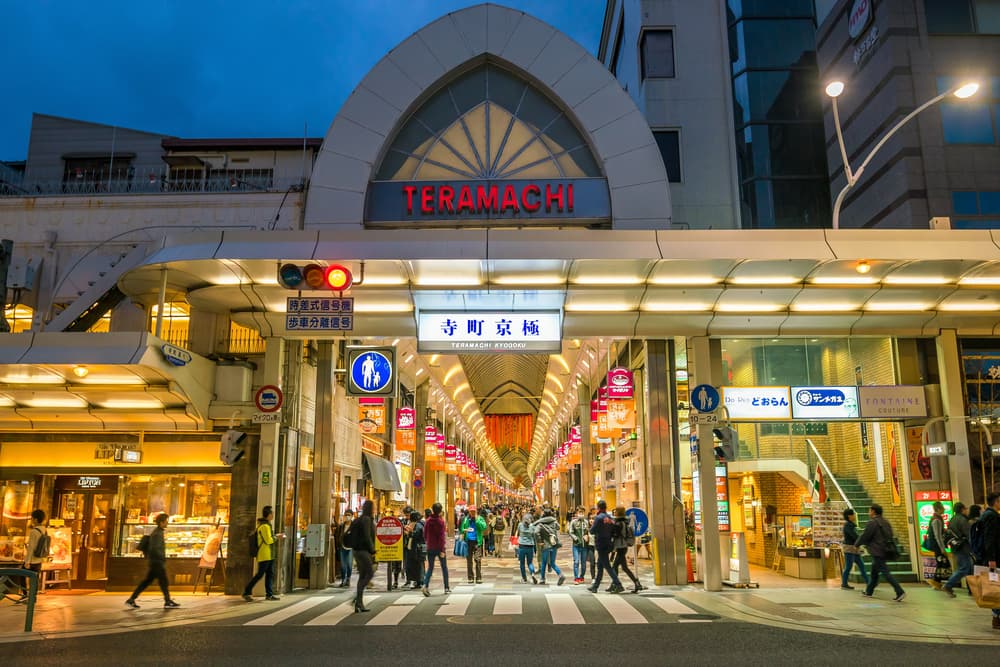
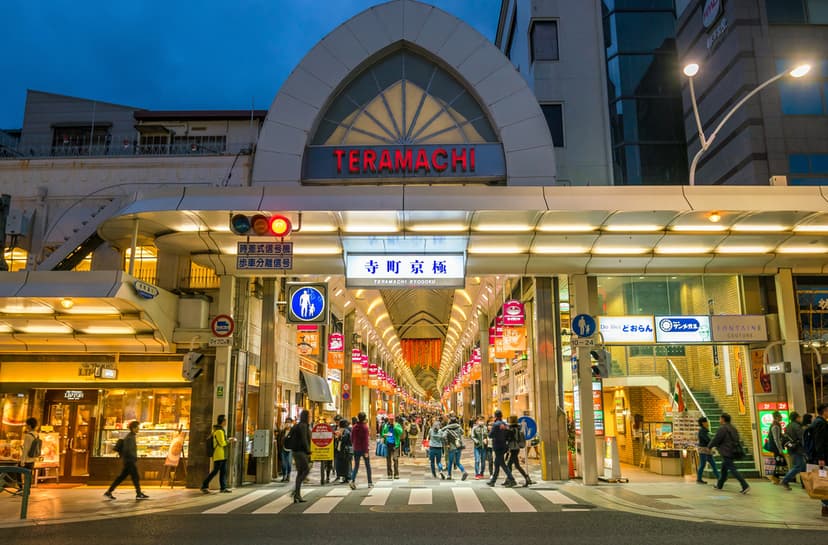
Kyoto is famous for its temples, traditional streets, and refined cuisine, but one of the best places to discover its everyday food culture is Nishiki Market. Join Trevor as he explores this historic covered shopping street, where fresh seafood, Kyoto pickles, tofu treats, Japanese sweets, and local ingredients offer a delicious introduction to the city.
Located in central Kyoto, Nishiki Market is easy to add to a day of shopping and sightseeing. Trevor’s tip? Arrive with an appetite, leave room for unexpected discoveries, and remember that this is a working market as well as a popular visitor attraction.
Good to Know Before You Go
Nishiki Market Kyoto Overview | Details |
Location | Nishikikoji Street, central Kyoto, between Teramachi and Takakura streets |
Market length | Approximately 400 metres |
Opening hours | Many shops open around 9–10 AM and close in the late afternoon, but hours vary |
Entry fee | Free; food, drinks, and shopping are charged separately |
Best time to visit | Morning to early afternoon, depending on the shops you want to visit |
Recommended duration | Around 1–2 hours for a market visit; allow longer for shopping and nearby attractions |
Nearest stations | Shijo Station, Karasuma Station, and Kyoto-Kawaramachi Station |
Main experience | Kyoto specialties, fresh food, local snacks, tea, pickles, kitchenware, and souvenirs |
Important etiquette | Avoid eating while walking; enjoy purchases near the shop or in its designated eating area |
Getting to Nishiki Market
Nishiki Market is in central Kyoto, making it convenient to reach by public transport or on foot from nearby shopping districts. Its covered arcade runs between Teramachi Street and Takakura Street, just north of Shijo Street.
By Train or Subway
- From Shijo Station: Walk approximately three minutes from the Kyoto Municipal Subway Karasuma Line station.
- From Karasuma Station: The market is around a three-minute walk from the Hankyu Kyoto Line station.
- From Kyoto-Kawaramachi Station: Walk approximately four minutes from the Hankyu Kyoto Line station.
Travel times depend on your exit and walking route, so check the station signs for the most convenient way to reach the market.
By Bus
From Kyoto Station, you can take a city bus towards the Shijo-Takakura area and walk to the market. Bus routes and traffic conditions can affect journey times, so check the latest route information before leaving.
From Travelodge Hotels in Kyoto
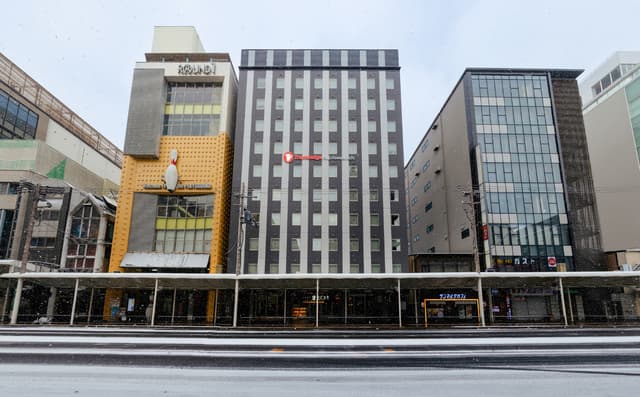
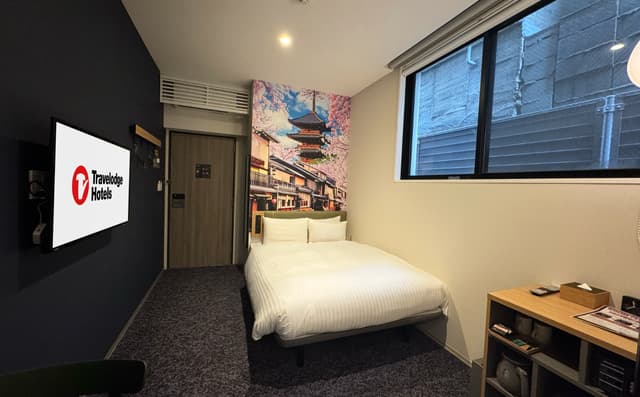
If you are staying at Travelodge Kyoto Shijo Kawaramachi, Nishiki Market is approximately a seven-minute walk away, making it easy to visit for a morning food stop or an afternoon stroll.
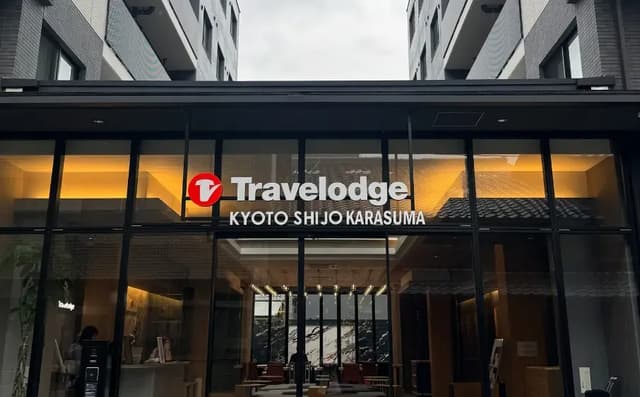
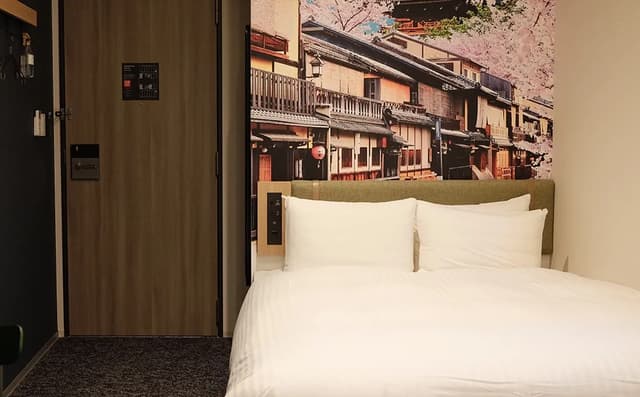
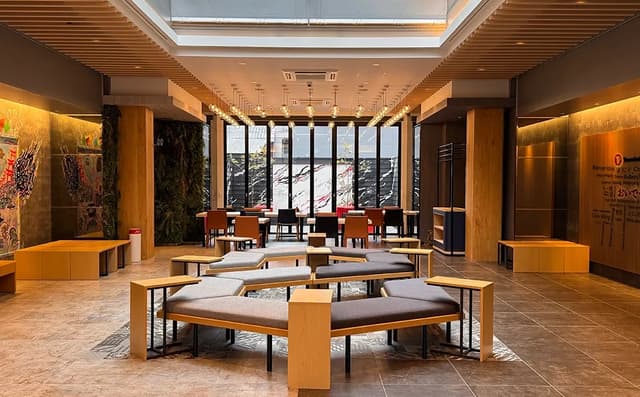
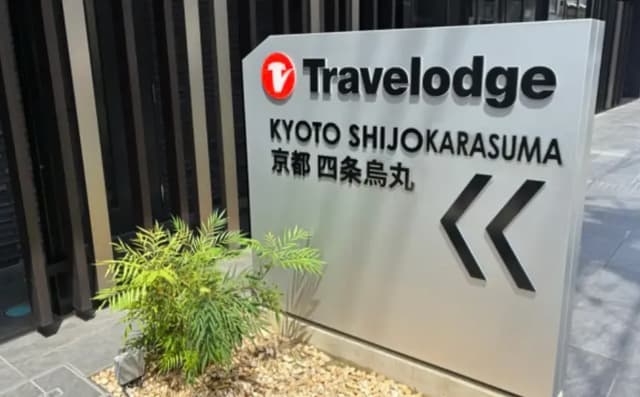
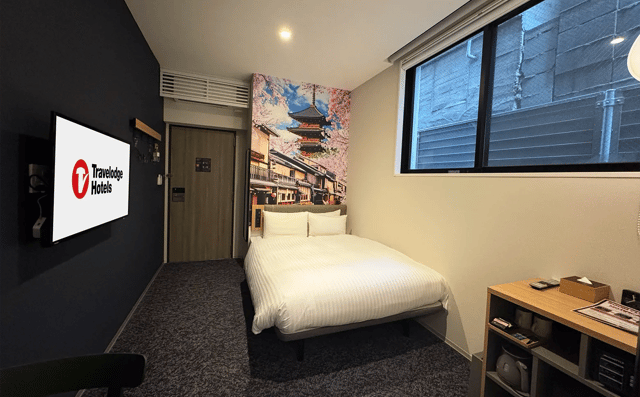
From Travelodge Kyoto Shijo Karasuma, the market is approximately a 16-minute walk or around 12 minutes by public transport. Both locations are useful starting points for exploring central Kyoto, with shopping streets, dining spots, and cultural attractions within reach.
Nishiki Market Opening Hours and the Best Time to Visit
What Time Does Nishiki Market Open?
Many Nishiki Market shops begin opening around 9–10 AM, although some open earlier or later. Since the market consists of individual businesses rather than one large store, there is no single opening time that applies to every stall.
For the best chance of finding a broad selection of food shops open, aim for mid-morning. This also gives you time to explore before the market becomes especially busy.
What Time Does Nishiki Market Close?
Many shops close around 5–6 PM, but closing times vary by business. Some food stalls may sell out of popular items earlier, while restaurants and other businesses may operate on different schedules.
Some shops also take weekly rest days, often on Wednesdays or Sundays. Check the individual shops you most want to visit before setting out, particularly if you have a specific food in mind.
When is the Best Time to Visit?
Morning to late morning: A good choice for browsing food stalls, shopping for ingredients, and seeing shopkeepers prepare their products.
Around lunchtime: A lively time to sample food and look for a quick meal, though the narrow arcade can become crowded.
Later afternoon: Potentially quieter in some areas, but your choice of open shops and available food may be more limited.
Trevor’s advice: build your visit around the food you most want to try rather than assuming every stall will be open all day.
What to Expect at Nishiki Market
.webp)
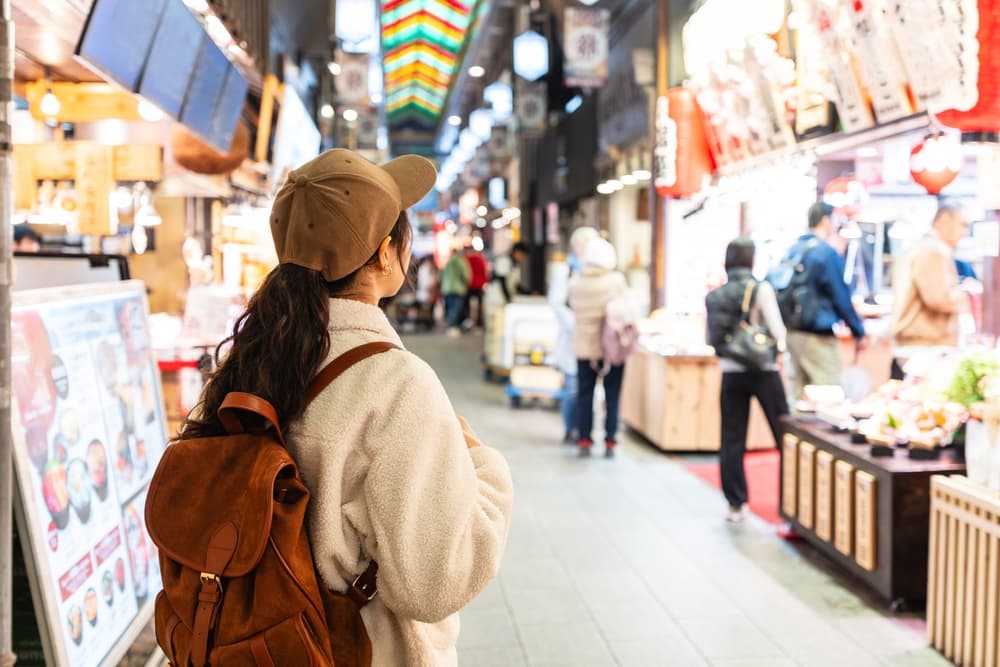
Often called Kyoto’s Kitchen, Nishiki Market has a history stretching back around 400 years. Today, its covered passage is lined with specialist shops selling fresh fish, seafood, pickles, tofu, Japanese sweets, tea, seasonings, prepared dishes, and cooking utensils.
The market is compact, but there is plenty to notice. A shop selling colourful pickles may sit near a seafood counter, a traditional confectionery shop, or a vendor preparing freshly cooked snacks.
A Taste of Kyoto’s Food Culture
Nishiki Market is a good place to discover ingredients and dishes associated with Kyoto. Look for Kyo-yasai, or Kyoto-grown vegetables; tsukemono, or Japanese pickles; dashimaki tamago, a Japanese rolled omelette; and yuba, the delicate skin that forms on heated soy milk.
Some stalls specialise in ingredients for home cooking, while others sell ready-to-eat snacks. This mix is part of the market’s appeal: it offers a look at both Kyoto’s dining culture and the products used in local kitchens.
A Busy, Narrow Shopping Street
The arcade is relatively narrow, and the busiest sections can become congested. Visitors may stop suddenly to look at food displays, take photographs, or make purchases, so move patiently and leave room for other shoppers.
What About Prices and Photos?
Prices vary by shop, portion size, and ingredient. Check the displayed price before ordering, especially for seafood, premium beef, and other items sold by weight or piece.
Photography can be appealing because of the colourful displays and food preparation. However, ask permission when appropriate and follow signs or staff instructions, particularly inside shops and around workers.
Travelodge Hotel Near Nishiki Market






Must-Try Food at Nishiki Market Kyoto
Nishiki Market is a destination for both familiar Japanese favorites and Kyoto specialties. Trevor recommends sampling a few different types of food instead of filling up at the first stall.
1. Seafood and Freshly Grilled Unagi (Eel)
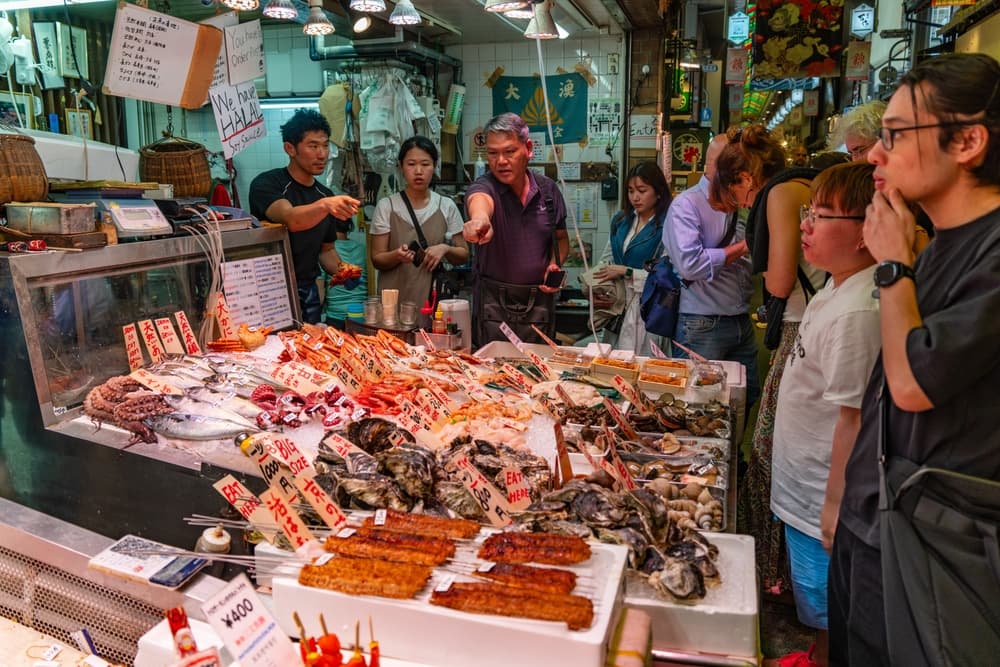
Seafood is a classic part of Nishiki Market’s identity. Depending on the vendor and the day’s selection, you may find grilled fish, scallops, oysters, sashimi, seafood skewers, and other freshly prepared bites.
Unagi, or freshwater eel, is another dish to look out for. It is often grilled with a savoury-sweet glaze and has a rich flavour that makes it a memorable Japanese food experience.
Other seafood snacks to look for include:
- Grilled scallops: Often served hot with a savoury sauce or seasoning.
- Tako-tamago: A small octopus snack traditionally topped with a quail egg.
- Oysters and sashimi: Availability depends on the shop and its current selection.
- Seafood skewers: A convenient way to sample a small portion while exploring.
Look for seafood specialists such as Tsunori or Kaisen Hotate Center, which are listed in the market’s shop directory. Menus, prices, and availability may change, so check the display before ordering.
Trevor’s tip: Seafood prices can vary considerably by size and preparation. Confirm the price and serving size before buying, and eat seafood promptly as directed by the vendor.
2. Kyoto-Style Dashimaki Tamago
Dashimaki tamago is a Japanese rolled omelette made with eggs and dashi, a savoury stock commonly prepared with ingredients such as kelp and bonito. Kyoto-style versions are known for their soft texture and delicate, savoury flavour.
This is a good choice for visitors who want to try something distinctly Japanese without choosing an unfamiliar ingredient. Miki Keiran is a well-known market shop associated with dashimaki tamago.
Enjoy it freshly prepared when available, and pay attention to the difference between the gentle flavour of the egg and the richness of the broth.
3. Kyoto Pickles (Tsukemono)
Kyoto pickles are among the market’s most recognisable specialties. They are made from vegetables preserved or seasoned using different techniques, resulting in a range of colours, textures, and flavours.
Popular varieties include:
- Shibazuke: A purple-red pickle traditionally made with vegetables such as cucumber or eggplant and red shiso.
- Suguki: A Kyoto pickle made from a local turnip variety, known for its distinctive tang.
- Senmaizuke: Thinly sliced turnip pickled with a delicate, mildly sweet and sour flavour.
Uchida Tsukemono and Masugo are names to look for when exploring Kyoto pickle shops. Many varieties are sold in packages, making them an interesting souvenir for travellers who enjoy Japanese food.
If you are unsure which variety to choose, ask the shopkeeper about its flavour and how it is usually eaten.
4. Soy-Milk Doughnuts, Tofu Treats, and Yuba
Tofu and soy-based foods have an important place in Kyoto’s culinary traditions. At Nishiki Market, you may encounter tofu in fresh, chilled, or prepared forms, as well as sweet snacks made with soy milk.
Soy-milk doughnuts are worth trying if you want a simple snack between savoury dishes. Their flavour and texture can differ from conventional doughnuts, making them an enjoyable alternative.
Also look for yuba, the thin layer that forms on the surface of heated soy milk. It can be served fresh or dried and has a delicate texture that works well in a range of dishes.
Yubakichi is a long-established market specialist dedicated to yuba. Kyo Toufu Fujino, associated with the Konnamonja shop, is another name to look for when exploring tofu-based treats. Confirm current products before visiting, as specific items may vary.
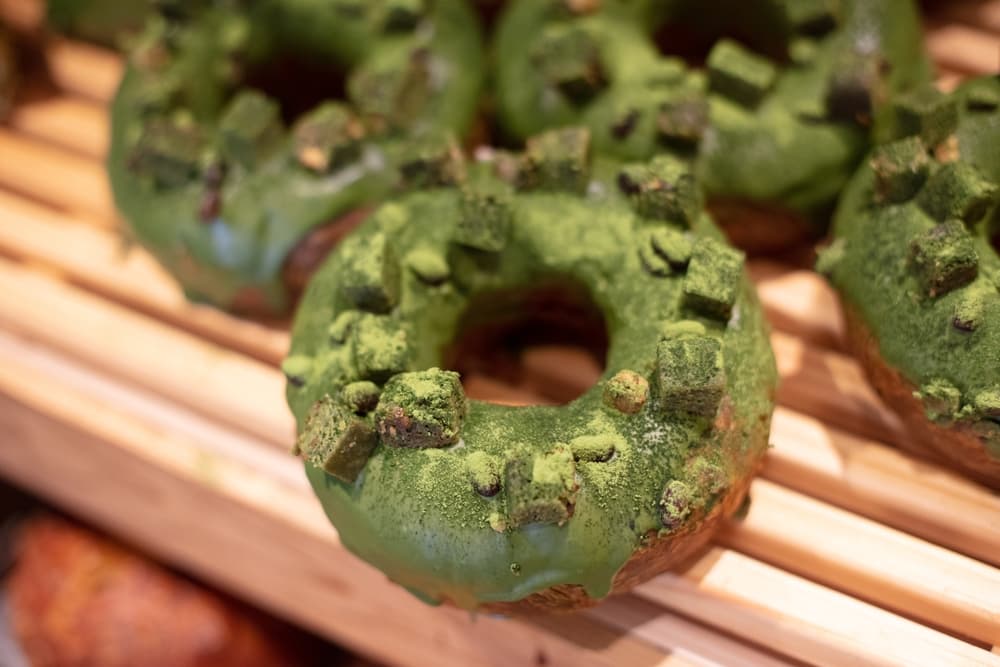
5. Matcha Mochi and Japanese Sweets
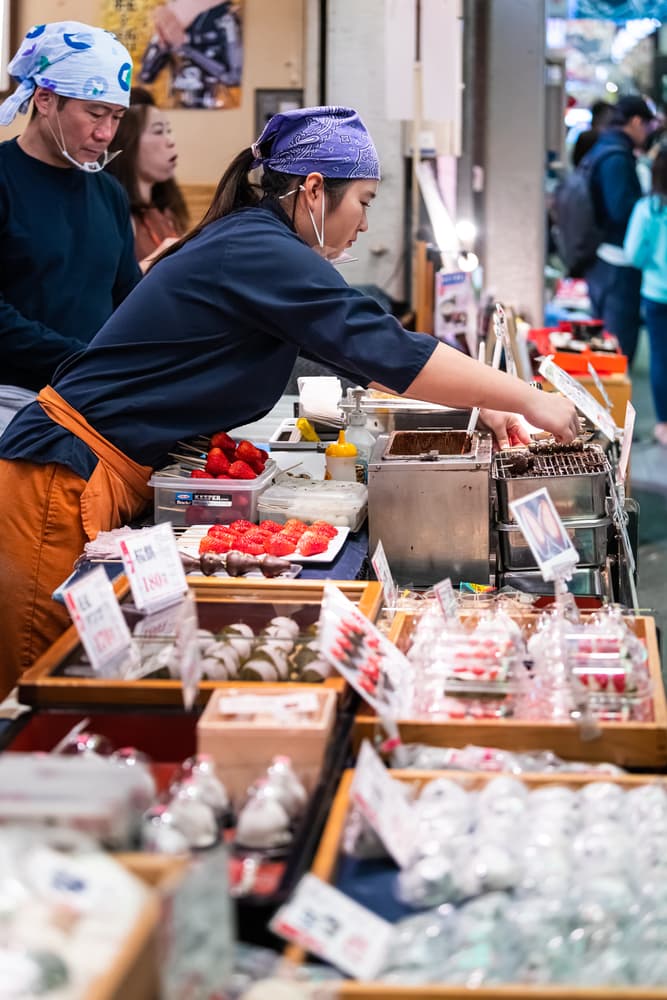
Kyoto is closely associated with Japanese tea culture, and Nishiki Market offers opportunities to sample sweets that use matcha and other traditional ingredients.
Look for matcha-flavoured mochi, wagashi, and other seasonal confections. Wagashi is a broad category of Japanese sweets often enjoyed alongside tea, with ingredients, shapes, and colours that may reflect the season.
Some sweets are soft and chewy, while others use bean paste, rice flour, or other traditional ingredients. If you plan to buy sweets as gifts, check their packaging and storage instructions before travelling with them.
6. Uji Green Tea
Uji, a city south of Kyoto, is famous for its tea. Nishiki Market is a convenient place to browse green tea and matcha products, from loose-leaf tea to sweets and packaged gifts.
If you enjoy tea, look for products that match how you plan to use them. Loose-leaf green tea is suitable for brewing, while matcha powder may be intended for drinks, cooking, or baking.
Ask about preparation and storage if you are buying a product for the first time. A small pack of tea can also make a practical souvenir that is easy to carry.
7. Other Foods Worth Looking For
Leave room for a few spontaneous discoveries. Depending on the shops open during your visit, you may come across:
- Fish cakes: Savoury prepared foods that may be sold plain or on skewers.
- Kyo-yasai: Kyoto-grown vegetables, sometimes sold fresh or used in prepared dishes.
- Croquettes and fried snacks: Convenient bites for a quick stop.
- Seasonal sweets: Specialities that change throughout the year.
- Rice crackers and packaged snacks: Easy-to-carry options for later.
Not every item is available at every stall, and some products are seasonal. Treat this list as a starting point rather than a guaranteed menu.
Where to Eat: Recommended Stalls and Less-Obvious Stops
The best Nishiki Market food experience is not necessarily about finding one perfect meal. Trevor suggests picking a few specialist shops, trying small portions where possible, and leaving time to discover something unexpected.
For Traditional Kyoto Specialties
Miki Keiran — Dashimaki Tamago
Look for this established name if you want to try Kyoto-style rolled omelette. It is a useful stop for visitors curious about a savoury dish made with eggs and dashi.
Uchida Tsukemono — Kyoto Pickles
A good shop to explore if you want to compare traditional pickle varieties or bring home a taste of Kyoto. Ask about flavour differences before choosing a package.
Masugo — Pickles and Preserved Vegetables
Another name associated with Kyoto pickles, offering an opportunity to discover different varieties and styles of tsukemono.
Yubakichi — Yuba
For a closer look at Kyoto’s soy-milk traditions, seek out this specialist shop dedicated to yuba. Its long history makes it particularly interesting for travellers who enjoy learning about traditional food production.
For Seafood and Grilled Snacks
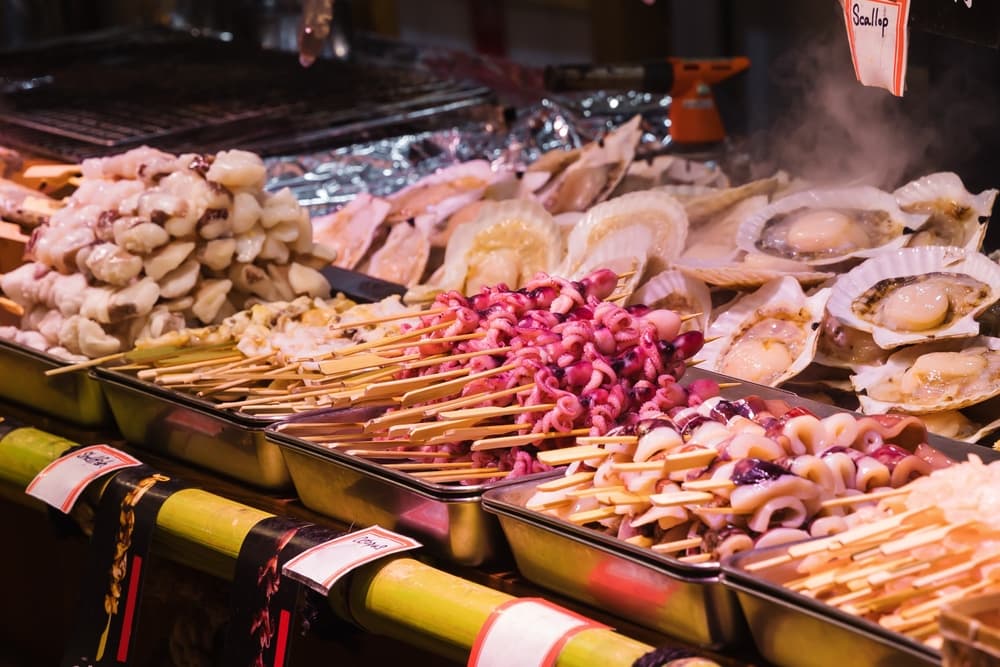
Tsunori — Fresh Fish and Charcoal-Grilled Seafood
Tsunori is a fresh-fish specialist with a long history in the market. Its charcoal-grilled fish is worth looking out for if you want to see a traditional seafood shop at work.
Kaisen Hotate Center — Scallops and Seafood Snacks
This shop focuses on grilled seafood, skewers, and seafood rice bowls, particularly those featuring scallops. It may appeal to visitors who want to sample seafood in a casual market setting.
As with all fresh seafood, check the price and serving size before ordering.
For a Deeper Look at Kyoto Cuisine
Ikemasa-tei — Obanzai and Home-Style Dishes
Obanzai refers to Kyoto-style home cooking, often featuring seasonal ingredients and a variety of small dishes. If you see Ikemasa-tei operating during your visit, it is a name to investigate for a more meal-oriented experience, including dishes associated with yuba and Kyoto cooking.
Ajisai Notoyo — Eel
Ajisai Notoyo is another name associated with eel dining in the market area. It may suit visitors who want to explore unagi beyond a quick snack, though current service arrangements and opening times should be checked before planning a stop.
For Wagyu and Other Food Discoveries
Nandaimon Nishiki Branch — Wagyu
If premium beef is on your list, look for the Nandaimon Nishiki branch in the market directory. Its beef-focused offerings make it a potential stop for travellers interested in Japanese wagyu.
Sawawa — Matcha Sweets
Sawawa is a name to look for when you want to switch from savoury food to matcha-based treats. Check its current product selection if you have a particular dessert in mind.
SNOOPY Cha-ya — Character-Themed Treats
For visitors who enjoy character merchandise and themed cafés, SNOOPY Cha-ya may offer a different kind of break from traditional food stalls. Confirm the current location and operating details before making it a dedicated stop.
Trevor’s Local-Find Strategy
Rather than chasing every recommended shop, choose two or three foods you genuinely want to try and use them as anchors for your route. Browse the neighboring stalls as you go, and be open to a specialty that catches your attention.
For a more reliable plan, check the market’s current shop directory shortly before your visit. Individual businesses may change their hours, take rest days, or adjust their menus.
What to Buy at Nishiki Market
Nishiki Market is also a good place to shop for gifts and items connected to Kyoto’s food culture. Not everything is meant to be eaten immediately, so set aside time to browse beyond the ready-to-eat stalls.
Kyoto Pickles and Packaged Foods
Pickles, preserved foods, seasonings, and other Japanese pantry items can make distinctive souvenirs. Check the label for storage requirements, especially if you will be travelling for several more days.
Tea and Matcha Products
Green tea and matcha are practical choices for tea lovers. Choose loose-leaf tea, matcha powder, or packaged sweets according to how much space you have in your luggage and how you plan to use them.
Japanese Sweets
Packaged wagashi, rice crackers, and other sweets can be suitable gifts, depending on their shelf life. Fresh or chilled items may require more careful handling.
Kitchenware and Japanese Goods
Nishiki Market is not only about food. Some shops sell kitchen tools, knives, ceramics, chopsticks, and other goods associated with Japanese cooking and dining.
If you are considering buying a kitchen knife, check airline and destination-country rules before travelling. For any food products, also check the import requirements of the country you are returning to.
Market Etiquette and Tourist Rules
Nishiki Market is a place to enjoy, but it is also a working shopping street used by local residents and food businesses. A few simple habits help make the experience better for everyone.
- Do not eat while walking. The market association asks visitors to enjoy food in front of the shop where it was purchased or inside the shop, where permitted.
- Keep the passage clear. Move aside before stopping to check a map, take a photo, or decide what to order.
- Ask before photographing people or shop interiors. Follow any signs or staff instructions about photography.
- Respect food displays. Avoid touching items unless the vendor invites you to do so.
- Dispose of rubbish properly. Use the bins provided or follow the shop’s directions.
- Check prices before ordering. This is particularly important for seafood, beef, and products priced by size or weight.
- Be patient in busy areas. Give other shoppers room to browse and vendors space to serve customers.
Trevor’s reminder: enjoying a snack beside the shop where you bought it is part of visiting Nishiki Market respectfully.
What to Bring to Nishiki Market
A little preparation can make your visit more comfortable, especially if you plan to browse, eat, and shop in one trip.
- Cash and a payment card: Payment methods vary by business, so having both gives you more flexibility.
- A reusable shopping bag: Useful for packaged food, tea, and small souvenirs.
- Comfortable walking shoes: You will likely combine the market with nearby shopping streets or attractions.
- A phone or camera: Helpful for checking directions, saving shop names, and taking permitted photographs.
- A short food wish list: Pick a few must-try items, but leave room for spontaneous discoveries.
- Time for queues: Popular stalls can be busy, particularly around lunchtime.
- A plan for perishable purchases: Save chilled or fresh food shopping until later if you have other activities planned.
You do not need to bring everything on this list. The idea is to stay flexible while making space for the food and shops you are most interested in.
Tips for Visiting Nishiki Market
Start With a Few Must-Try Foods
Decide on two or three priorities, such as dashimaki tamago, Kyoto pickles, or yuba. This helps you pace your visit without turning the market into a checklist.
Check Shop Hours Before You Go
The market does not have one universal schedule. If a particular shop is the main reason for your visit, check its current opening hours and rest days before travelling.
Compare Prices and Portions
Food prices can vary between stalls, and some products are sold in different sizes. Check the displayed price and serving details before ordering, particularly for seafood and premium ingredients.
Plan Around Crowds
The market can be busiest around lunchtime and during popular travel periods. An earlier visit may make it easier to browse, though some shops may not yet be open.
Buy Chilled Items at the Right Time
If you want to take home fresh or chilled food, consider buying it near the end of your market visit. Follow the vendor’s storage advice and any applicable travel restrictions.
Keep Exploring After the Market
Nishiki Market is close to shopping arcades, shrines, riverside walks, and dining streets. Instead of returning to your hotel immediately, consider adding one nearby stop that matches your mood.
Lesser-Known Places Near Nishiki Market
Nishiki Market is only one part of central Kyoto. Once Trevor has sampled a few local specialties, there are quieter corners and smaller discoveries nearby that can add another dimension to the day.
1. Rokkakudo (Choho-ji Temple)
Rokkakudo, formally known as Choho-ji, is a Buddhist temple recognised for its distinctive hexagonal main hall. Its compact grounds offer a quieter contrast to the busy shopping streets around Nishiki Market.
Visit for a short pause, a closer look at traditional architecture, and a change of pace after navigating the crowds. It is a good option for travellers who want to include a cultural stop without committing to a long temple visit.
2. Nishiki Tenmangu Shrine
Located at the eastern end of Nishiki Market, Nishiki Tenmangu Shrine is an easy addition to your route. Its lanterns and entrance, set among the surrounding buildings, make it an interesting place to stop before continuing into the shopping arcades.
The shrine is dedicated to Sugawara no Michizane, a historical scholar associated with learning. Take a moment to look around respectfully, and check local guidance if you would like to make a wish or participate in shrine customs.
3. The Quieter Corners of Teramachi Street
Teramachi Street is known for shopping, but it is worth looking beyond the busiest sections. Depending on the stretch you explore, you may find bookshops, specialist retailers, craft goods, and smaller stores that invite a slower browse.
This is a good place to continue exploring after Nishiki Market if you enjoy discovering items beyond typical souvenirs. Allow yourself time to look around rather than rushing from one major attraction to the next.
4. Look for Kyoto’s Everyday Food Culture
Trevor’s lesser-known discoveries are not always about finding a secret attraction. Sometimes, they are about paying attention to the specialist businesses that make a place distinctive.
At Nishiki Market, that could mean asking about an unfamiliar pickle, learning how yuba is made, or discovering a shop that sells ingredients used in Kyoto home cooking. Check the current market directory for specialist food shops and let your curiosity shape the route.
Trevor’s local tip: The best discoveries often happen when you slow down. After choosing your must-try foods, leave part of your visit unscheduled so you can browse a shop that catches your eye.
Popular Places Near Nishiki Market
Want to make a full day of exploring central Kyoto? These nearby places pair naturally with a market visit, whether you want more shopping, a quiet break, or a lively evening.
1. Shinkyogoku Shopping Street
Shinkyogoku is a covered shopping arcade close to Nishiki Market, with shops selling souvenirs, fashion, character goods, and other everyday items. It is an easy next stop if you want to continue shopping without travelling far.
Best for: Souvenir hunting, casual browsing, and finding gifts after exploring the market.
2. Kawaramachi Shopping District
The Kawaramachi area offers a broader mix of shopping, department stores, cafés, restaurants, and city-centre activity. It works well as a continuation of a day spent around Nishiki Market and the nearby arcades.
Best for: Shopping, a café break, or finding a place for a more substantial meal.
3. Pontocho Alley
Pontocho is a narrow dining street near the Kamo River, known for its concentration of restaurants and its evening atmosphere. It is a natural choice if your market visit finishes early enough to leave time for dinner.
Best for: Dinner, traditional dining settings, and an evening walk through central Kyoto.
4. Kamo River
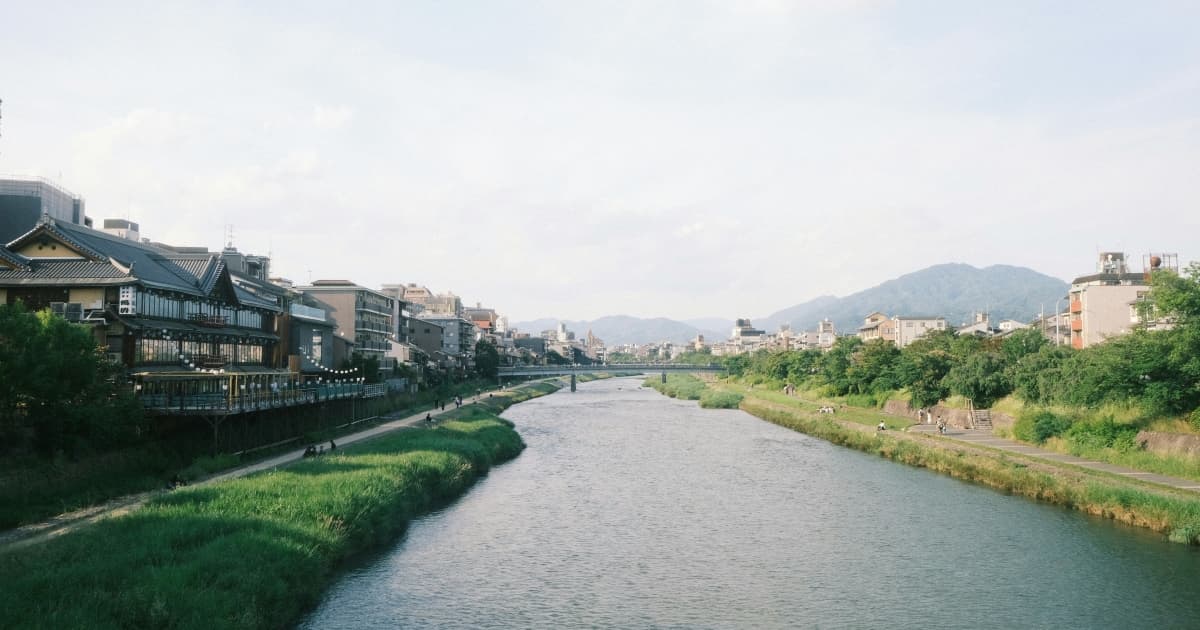
The Kamo River offers a more open setting after the close quarters of the market. Take a walk along the riverside, enjoy the changing city views, or pause for a break before continuing to another neighborhood.
Best for: A relaxed walk, photographs, and a breather between sightseeing stops.
5. Explore More of Nishiki Market
If the food stalls have captured your attention, you do not need to leave as soon as you finish eating. Spend more time browsing shops that specialise in tea, pickles, tofu, seasonings, kitchenware, or packaged food gifts.
Best for: Travellers who prefer local food culture and specialist shops to a packed sightseeing schedule.
Trevor’s Easy Itinerary Ideas
For food and shopping: Start at Nishiki Market, continue to Shinkyogoku Shopping Street, then explore the Kawaramachi shopping district.
For food and a quiet break: Explore Nishiki Market, stop at Nishiki Tenmangu Shrine, then head to Rokkakudo for a change of pace.
For food and an evening out: Visit Nishiki Market earlier in the day, take a walk beside the Kamo River, and finish with dinner around Pontocho Alley.
Make Your Kyoto Stay Go Further With Travelodge Hotels Asia
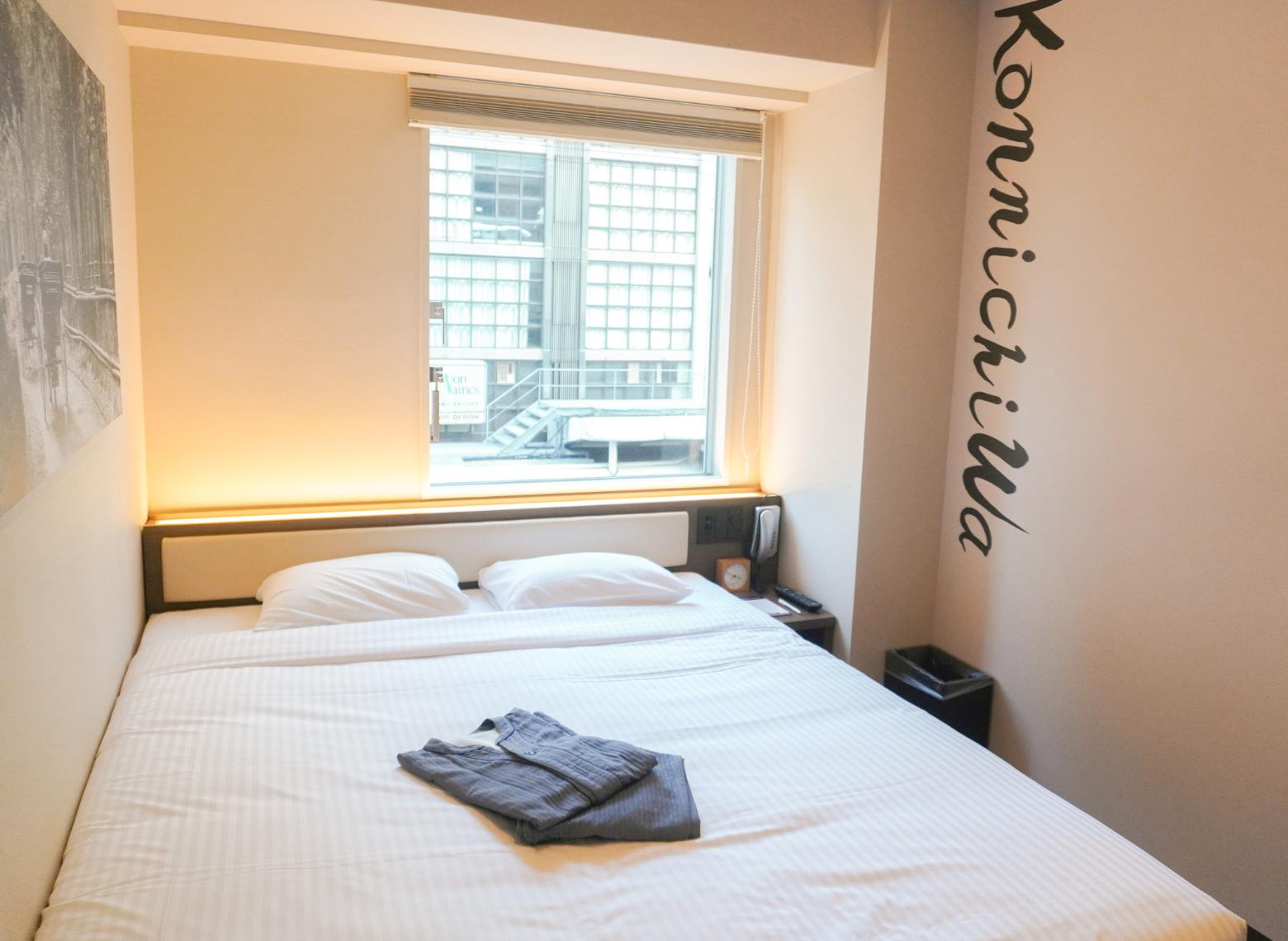
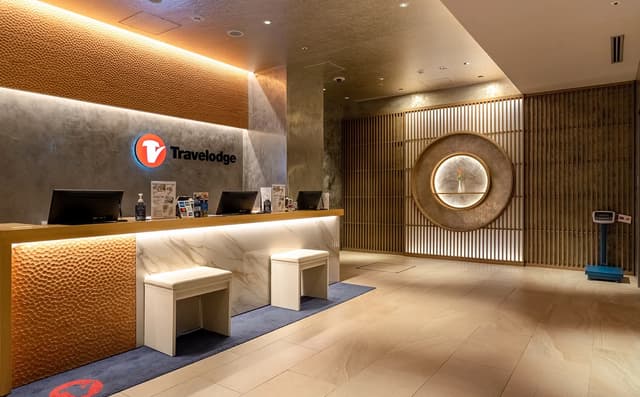
Exploring Nishiki Market is easier when your hotel is well placed for getting around central Kyoto. Staying nearby means you can start your day with local food discoveries, return to the city’s shopping streets, and continue sightseeing without spending too much time travelling between neighborhoods.
Travelodge Kyoto Shijo Kawaramachi is approximately a seven-minute walk from Nishiki Market. It is a convenient option for travellers who want to keep the market close to their plans and explore nearby shopping and dining areas on foot.
Travelodge Kyoto Shijo Karasuma is approximately a 16-minute walk away or around 12 minutes by public transport. Its central location makes it another practical base for exploring Kyoto’s city centre.
Travelodge Hotels Asia focuses on the essentials that support a comfortable, connected stay:
- Comfort: A welcoming place to rest between days of walking, food discoveries, and sightseeing.
- Convenience: Central locations that help make it easier to reach attractions, shops, restaurants, and transport connections.
- Connectivity: Access to city connections that helps you plan your route and continue exploring Kyoto.
Booking directly through the official Travelodge Hotels Asia website is a useful way to check the latest room options, direct-booking offers, and available benefits. Depending on the current promotion and eligibility, you may also find offers or Cashback Credits through the hotel’s loyalty program.
For a Kyoto trip that combines food, shopping, and cultural discoveries, choose a stay that makes it easy to enjoy more of the city at your own pace.
Discover Kyoto One Bite at a Time
Nishiki Market Kyoto offers much more than a quick stop for street food. Its specialist shops, traditional ingredients, and everyday food culture make it a rewarding place to discover Kyoto through its flavours.
Follow Trevor’s approach: try a few local favorites, look beyond the best-known stalls, respect the market’s etiquette, and leave time for the nearby streets and shrines. With a well-located hotel as your base, you can turn a market visit into a fuller exploration of central Kyoto.
Frequently Asked Questions About Nishiki Market Kyoto
What is Nishiki Market famous for?
Nishiki Market is known for Kyoto specialties, including pickles, fresh seafood, tofu and yuba, dashimaki tamago, Japanese sweets, green tea, and local cooking ingredients. It also has shops selling kitchenware and other Japanese goods.
What time does Nishiki Market open?
Many shops open around 9–10 AM, but individual opening times vary. Check the hours of any specific shop you want to visit before setting out.
What time does Nishiki Market close?
Many shops close around 5–6 PM, although some close earlier or operate on different schedules. The market does not have one closing time that applies to every business.
Is Nishiki Market open every day?
There is no single closing day for the entire market, because each shop sets its own schedule. Some shops take weekly rest days, often on Wednesdays or Sundays, and many close for part of the New Year holiday period. Check individual shop details before visiting.
How long should I spend at Nishiki Market?
Allow around one to two hours to browse the market and sample some food. If you plan to shop, visit specific vendors, or explore nearby attractions such as Shinkyogoku Shopping Street and Nishiki Tenmangu Shrine, allow more time.
Is Nishiki Market free to enter?
Yes, there is no general admission fee to enter Nishiki Market. You pay for food, drinks, and other items you purchase from individual businesses.
Can I eat while walking through Nishiki Market?
No. Visitors are asked not to eat while walking through the market. Enjoy your food in front of the shop where you bought it or inside the shop, where permitted.
What should I eat at Nishiki Market?
Popular choices include grilled seafood, unagi, tako-tamago, dashimaki tamago, Kyoto pickles, soy-milk doughnuts, yuba, matcha sweets, and Uji green tea. Availability depends on the shops open during your visit.
Is Nishiki Market worth visiting?
Nishiki Market is worth considering if you are interested in Japanese food culture, Kyoto specialties, and browsing traditional shops. It can be crowded, so visiting with a short list of foods to try and time to explore at your own pace can make the experience more enjoyable.
Which Travelodge hotels are near Nishiki Market?
Travelodge Kyoto Shijo Kawaramachi is approximately a seven-minute walk from the market. Travelodge Kyoto Shijo Karasuma is approximately a 16-minute walk away or around 12 minutes by public transport. Check the latest hotel details and offers on the official Travelodge Hotels Asia website before booking.
Share article
Our hotel
Never Miss an Update!
Join our newsletter to unlock travel tips, latest promotions, and updates.
Subscribe now