



Share article
Kyoto Experiment 2026, Japan's Premier Performing Arts Festival

Aiko Sato
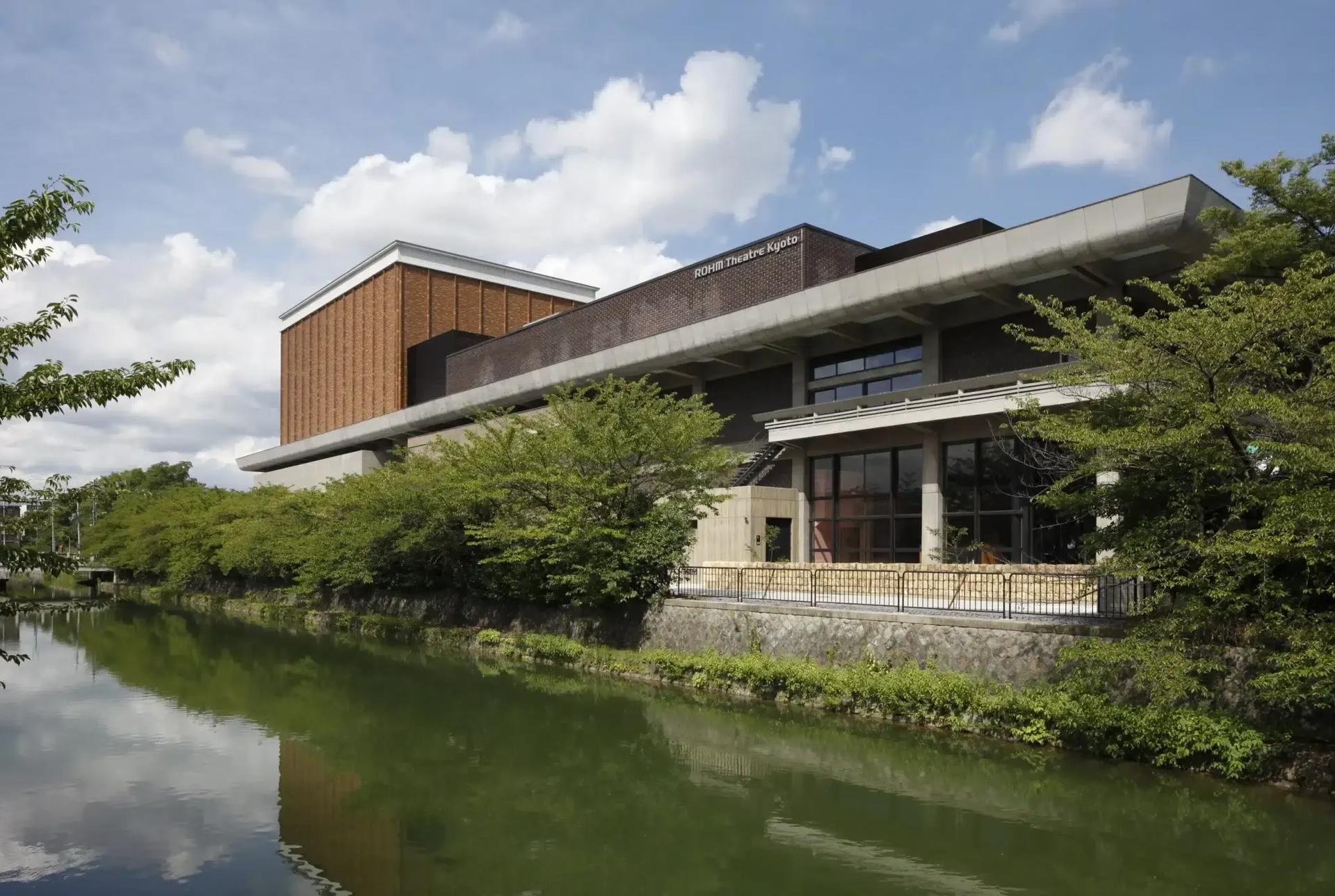
For 23 days every autumn, Kyoto sheds its reputation as a purely historic, temple-lined city and becomes one of Asia's most compelling stages for experimental performance. Kyoto Experiment, the Kyoto International Performing Arts Festival, has been pulling off this transformation since 2010, and the 2026 edition runs from October 3 to October 25 across four main venues plus a scatter of public spaces around the city.
If contemporary theater, experimental dance, immersive music, and boundary-pushing visual art sound like a good match for your Kyoto itinerary, this year's lineup gives you plenty to build a trip around. Below is everything confirmed for 2026: the dates, the schedule, the full program, this year's theme, and exactly how far each venue sits from two centrally located Travelodge hotels in Kyoto.
Kyoto Experiment 2026 at a glance
Feature | Details |
|---|---|
Concept | Japan's leading international festival for experimental performing arts, running since 2010 |
Dates | October 3 (Saturday) to October 25 (Sunday), 2026 — 23 days |
Key phrase | "Carrying a pebble in my pocket" |
Co-artistic directors | Yoko Kawasaki and Yuya Tsukahara |
Main venues | ROHM Theatre Kyoto, Kyoto Art Center, Kyoto Art Theater Shunjuza, THEATRE E9 KYOTO, and other locations around the city |
Language accessibility | English subtitles, bilingual program notes, or non-verbal work for most shows |
Ideal for | Global art lovers, experiential travelers, and anyone chasing a deeper look at contemporary Japanese culture |
What this year's theme, "carrying a pebble in my pocket," means
Every edition of Kyoto Experiment builds its program around a key phrase, and for 2026 that phrase is "Carrying a pebble in my pocket." The festival frames it as a response to a world increasingly shaped by division and conflict, where sharing a story with someone unlike you feels harder than it used to. A pebble is one of the oldest objects humans have carried, and the directors are using it as a symbol of quiet resistance and connection.
Practically, that theme shows up as a program built around memory, migration, and dialogue between strangers. Several of this year's Japan premieres deal directly with displacement and shared history, from a Vietnamese-Japanese dance collaboration to a South Korean showcase staged with the National Museum of Modern and Contemporary Art, Korea. It gives the festival's usual mix of theater, dance, and visual art an emotional throughline that first-time visitors will notice even without reading the program notes in advance.
Decoding the Festival: The Three Core Programs
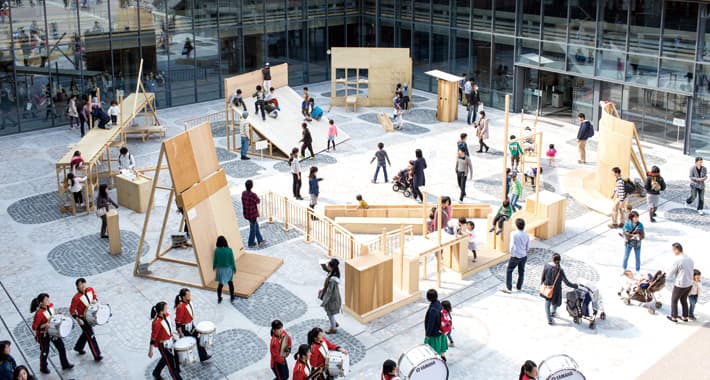
The three programs that shape the festival
Kyoto Experiment isn't a simple lineup of touring shows. It's built around three distinct tracks that work together, and understanding the split makes it much easier to plan which performances to prioritize.
Shows, the international main stage
This is the festival's creative engine: a curated lineup of experimental theater, dance, music, and exhibitions from Japan and abroad. Expect physical dance pieces that push the body to its limits, boundary-pushing performance art, and soundscapes that cross-examine cultural conventions rather than simply entertain. In 2026 this track includes several Japan premieres, among them Portuguese director Tiago Rodrigues's "By Heart," Brazilian choreographer Alice Ripoll's "Adorno" with Cia. REC, and Singaporean artist Ho Rui An's "Figures of History and the Grounds of Intelligence."
Kansai Studies, a deep dive into local history
This research-driven track digs into the hidden history, subcultures, and social currents of the Kansai region — Kyoto, Osaka, and Kobe — through workshops, community interviews, and performance walkabouts. The 2026 edition centers on artists Nanako Ishihara and Hitoshi Kaneko's ongoing project "kondaba," which traces the topography and daily life along the Kamo River through an exhibition running the full length of the festival, plus a companion theater piece in the closing week.
Super Knowledge for the Future, ideas beyond the stage
Known internally as SKF, this is the festival's intellectual hub: panel discussions, artist talks, and workshops that connect performing arts to bigger questions. The 2026 SKF lineup covers everything from a rock-balancing workshop to a lecture on the history of pockets in fashion, alongside artist talks with Tiago Rodrigues and Ho Rui An and a film screening tied to the 2019 Hong Kong protests. Most sessions offer English interpretation or a summary for international attendees.
The 2026 program, week by week
The full lineup runs across three weekends, with a quieter stretch of talks and workshops filling the gaps. Here's a snapshot of the headline shows and when they land.
Dates | Program | Venue |
|---|---|---|
Oct 1–Nov 8 | Kaori Endo x Mithu Sen, exhibition | Kyoto Art Theater Shunjuza |
Oct 3–4 | Kaori Endo x Mithu Sen, performance | Kyoto Art Theater Shunjuza |
Oct 3–4 | UMEDA Tetsuya + Otemon Gakuin High School Drama Club, "Yet Already" | ROHM Theatre Kyoto |
Oct 3–4 | Tiago Rodrigues, "By Heart" (Japan premiere) | ROHM Theatre Kyoto |
Oct 3–25 | kondaba, "Topographical Map of River kondaba" (Kansai Studies exhibition) | Kyoto Art Center |
Oct 3–25 | "Future Dictionary" (SKF exhibition) | Kyoto Art Center |
Oct 10–12 | Carmen Lee & Chun Shing Au / Theatre du Poulet, "GPO Box No.211" (Japan premiere) | THEATRE E9 KYOTO |
Oct 10–11 | Ho Rui An, "Figures of History and the Grounds of Intelligence" (Japan premiere) | THEATRE E9 KYOTO |
Oct 10–12 | Asian Playwright Project | THEATRE E9 KYOTO |
Oct 16–17 | Kim Kangyeon, Lee Minjin, Park Minhee (Japan premiere, with National Museum of Modern and Contemporary Art, Korea) | Kyoto Art Center |
Oct 17–18 | Alice Ripoll / Cia. REC, "Adorno" (Japan premiere) | Kyoto Art Center |
Oct 17–19 | Shie Minamino / OSUSHI, "OsuShiEGypt" | Kyoto Art Center |
Oct 21–22 | Echoes Now | ROHM Theatre Kyoto |
Oct 22–25 | Zan Yamashita & Nhã Thuyên, "giọt-giọt / shizukutachi" | Kyoto Art Center |
Oct 22–25 | kondaba, "Daily records of River kondaba" | Kyoto Art Center |
Ticketing opened in stages through the summer, and the festival posted an updated ticket information page on August 12, 2026. Because several of these are single-weekend, Japan-premiere runs, it's worth checking the official Kyoto Experiment ticket page as soon as you've settled on travel dates.
Where the festival happens, and how to get there
Programming spreads across four confirmed venues this year, each with its own neighborhood personality. Knowing the layout in advance helps enormously with planning, since a single day can easily combine a show at one end of the city with an exhibition at the other.
ROHM Theatre Kyoto sits in the Okazaki museum district, a short walk from Heian Shrine, and hosts the festival's largest international productions across its main hall and two smaller studios. Kyoto Art Center occupies a converted 1920s elementary school in central Nakagyo, and its retro classrooms-turned-studios carry most of the Kansai Studies and SKF programming this year.
THEATRE E9 KYOTO, in the Minami ward south of Kyoto Station, is an independent black-box space built for raw, up-and-coming work, and it's hosting this year's Japan premieres from Theatre du Poulet and Ho Rui An. If you'd rather anchor your trip near the station itself, it's worth browsing hotels near Kyoto Station before deciding where to book. Kyoto Art Theater Shunjuza, a newer addition to the venue roster, is carrying the Kaori Endo x Mithu Sen exhibition and performance for 2026.
How to enjoy Kyoto Experiment 2026 like a regular
Having sat through a few of these editions, a handful of habits make the festival run a lot smoother than winging it.
- Book your Japan premieres first. Shows like "By Heart" and "Adorno" only run for two or three performances total, and international festival-goers snap them up fast.
- Group your day by neighborhood rather than by show time. Pairing a ROHM Theatre Kyoto matinee with an afternoon in the Okazaki museum district saves you from crisscrossing the city twice in one day.
- Arrive 30 to 45 minutes early. Most venues here enforce strict no-late-entry rules once a performance starts, and there's no slipping in during a scene change.
- Keep your phone off, not just silenced. Rustling bags and screen glow both draw attention fast in the kind of intimate black-box spaces THEATRE E9 KYOTO and Kyoto Art Center use.
- Leave room in your schedule for the SKF talks. They're free or low-cost relative to the main shows, and they're often where you'll actually meet the artists and other festival regulars.
- Check the exhibition hours separately from the performance schedule. "Future Dictionary" and the kondaba exhibition run daily across the full festival, so they're easy to slot into a day when the ticketed shows don't line up with your schedule.
Where to stay for Kyoto Experiment 2026
With programming split between the Okazaki district, central Nakagyo, and the Minami ward, staying somewhere central saves real time over the three-plus weeks of the festival.
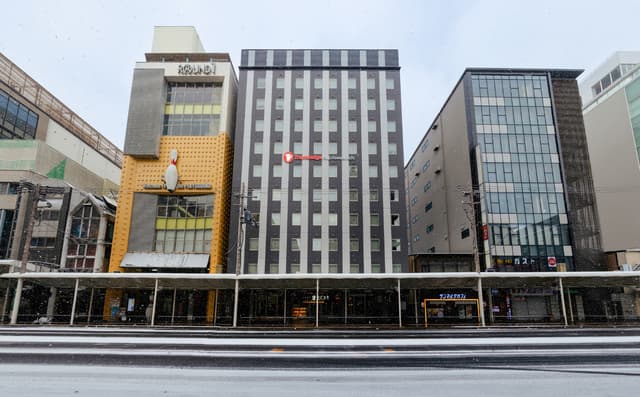
Travelodge Kyoto Shijo Kawaramachi
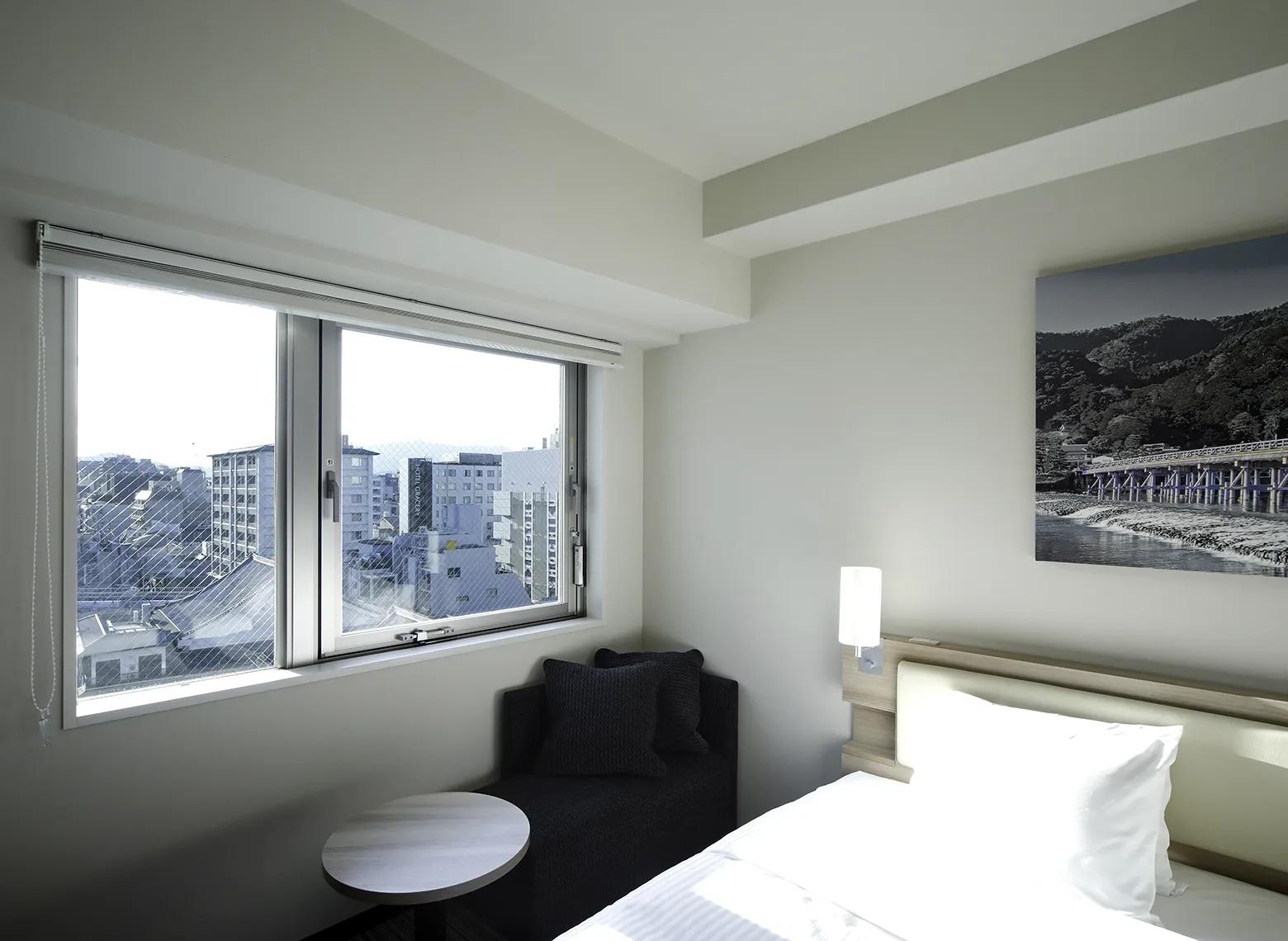
Travelodge Kyoto Shijo Kawaramachi sits right at Kawaramachi-dori and Sanjo, in the heart of downtown Kyoto and within walking distance of Pontocho Alley, Kiyamachi Street, and the Gion district. It's a doorstep away from Kyoto subway Shiyakusho-mae Station, Hankyu Kawaramachi Station, and Sanjo Keihan Station, and the Kawaramachi Sanjo bus stop right outside is also the boarding point for the bus routes that run to ROHM Theatre Kyoto.
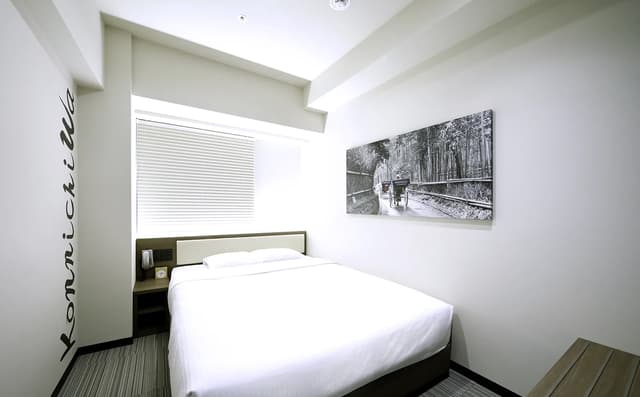
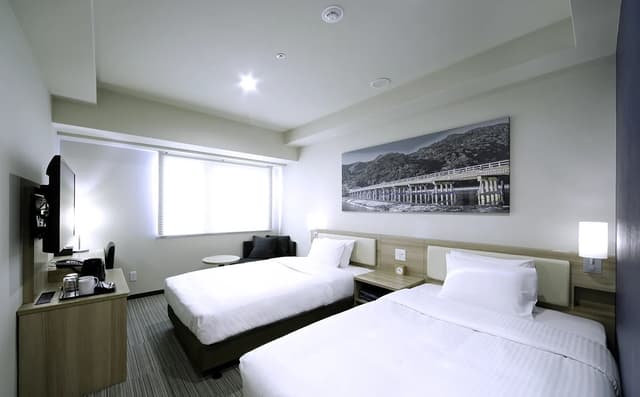
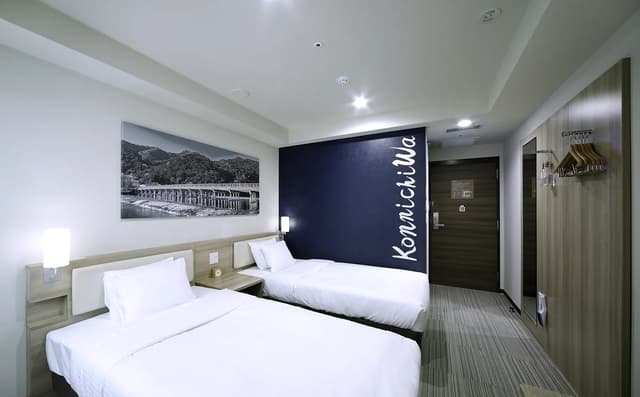
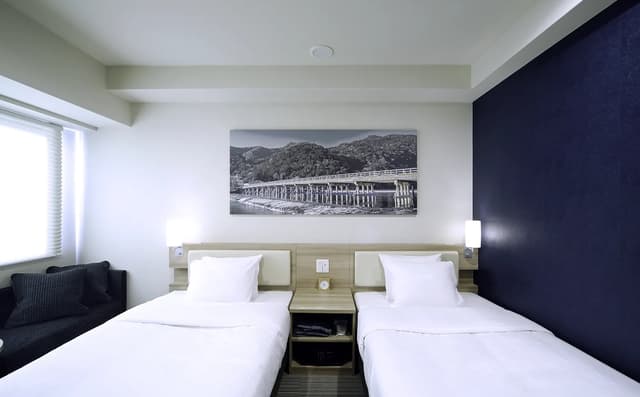
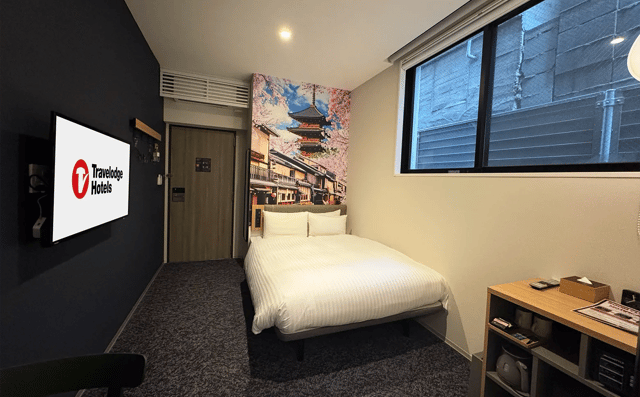
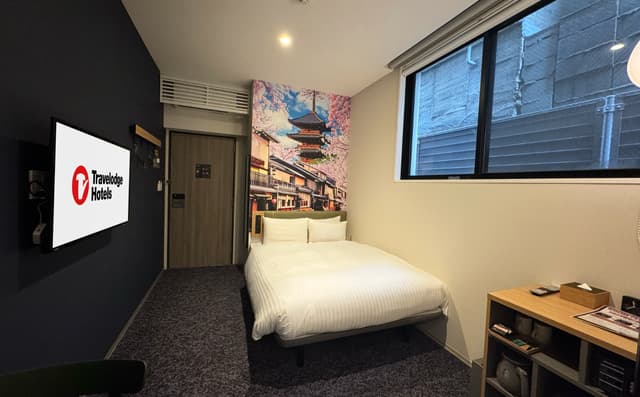
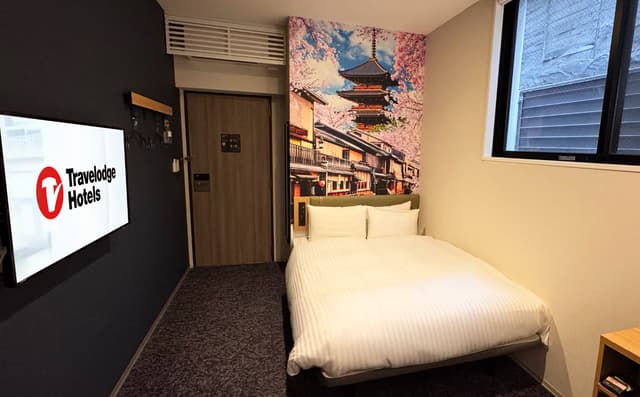
Rooms are simple and modern with custom-made beds, a working desk, air conditioning, and city views, and the hotel serves a daily breakfast on-site. For festival-goers prioritizing ROHM Theatre Kyoto's headline shows or an evening in Pontocho after a performance, this is the more convenient base.
Travelodge Kyoto Shijo Karasuma
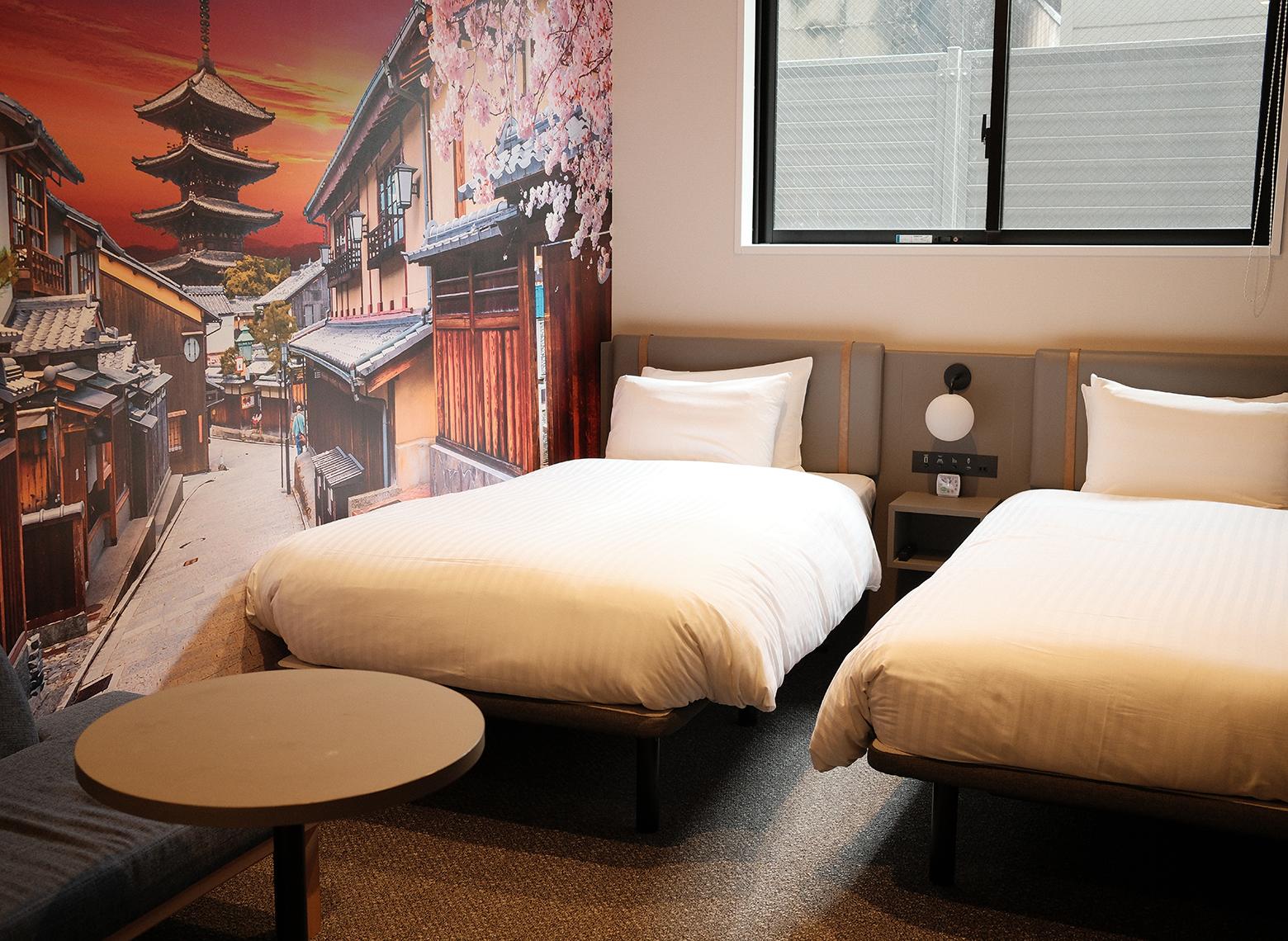
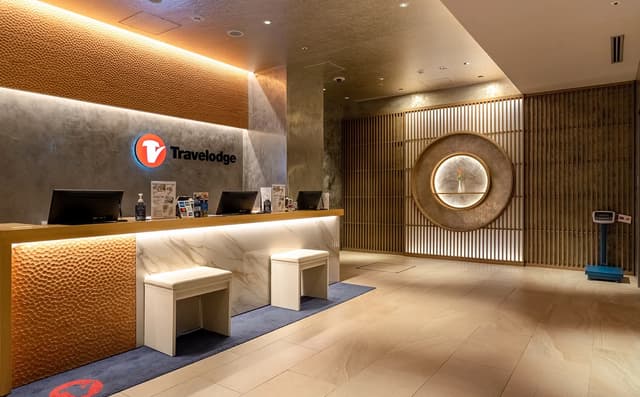
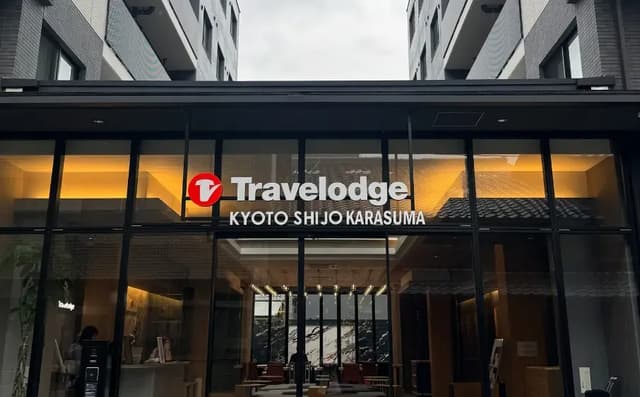
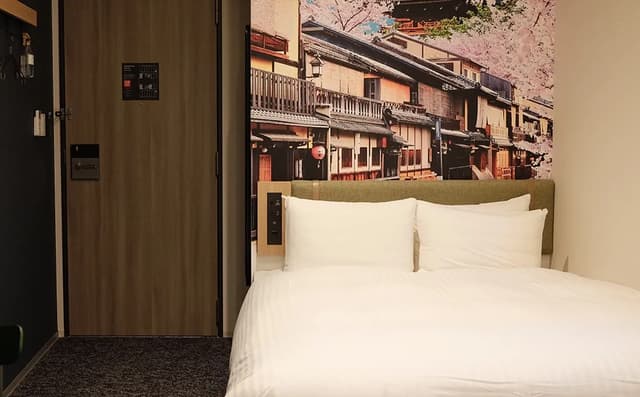
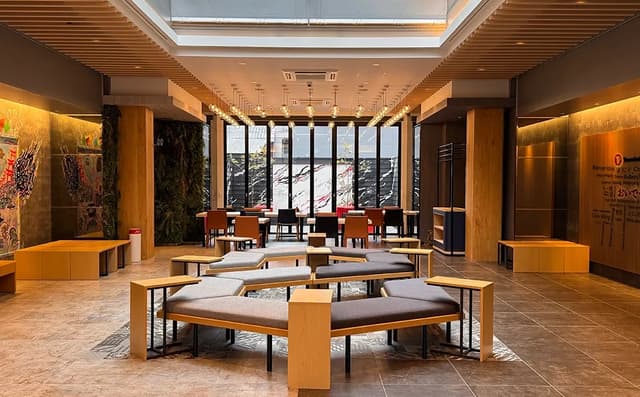
Recently renovated, Travelodge Kyoto Shijo Karasuma sits close to Omiya Station on the Hankyu Kyoto Line, just three minutes on foot from the exit, and within walking distance of Nijo Castle and Nishiki Market. Rooms come with free high-speed Wi-Fi, smart TVs, and 24-hour front desk support, plus a first-floor amenity bar and a 24-hour guest lounge for catching up on work between sessions.
Because it sits directly on the Hankyu Kyoto Line, it's a quick couple of stops to Karasuma Station and Kyoto Art Center, making it the better pick for anyone weighting their itinerary toward the Kansai Studies and SKF programming.
Here's roughly how long it takes to reach each venue from two centrally located Travelodge hotels in Kyoto.
Venue | From Travelodge Kyoto Shijo Kawaramachi | From Travelodge Kyoto Shijo Karasuma |
|---|---|---|
ROHM Theatre Kyoto (Okazaki, Sakyo Ward) | About 10–15 minutes by bus — routes 5, 32, and 46 all depart from the Kawaramachi Sanjo stop right outside the hotel | About 25–30 minutes, combining a short Hankyu train ride to Kawaramachi and one of the same Okazaki bus routes |
Kyoto Art Center (Nakagyo, near Shijo/Karasuma) | About 15 minutes — a short Hankyu ride from Kawaramachi to Karasuma Station plus the venue's own 5-minute walk from the exit | About 10–15 minutes — two stops on the Hankyu Kyoto Line from Omiya to Karasuma Station, then the same 5-minute walk |
THEATRE E9 KYOTO (Minami Ward) | About 20–25 minutes by subway — Karasuma Line to Kujo Station, then an 11-minute walk | About 20–25 minutes by subway — Karasuma Line to Kujo Station, then an 11-minute walk |
Because a couple of these routes involve one transfer, it's worth double-checking timings on a transit app on the day, especially if you're cutting it close before a show with a strict no-late-entry policy.
Why booking direct with Travelodge Hotels Asia is worth it
Both properties belong to Travelodge Hotels Asia, the fastest-growing mid-scale hotel brand in the region, with more than 4,000 rooms across 19 properties in Singapore, Japan, South Korea, Hong Kong, Malaysia, and Thailand, including a growing lineup of hotels across Japan. The brand's whole positioning is built around city-center locations near transport hubs, so a stay near Kawaramachi or Karasuma isn't a lucky exception, it's the standard the brand builds every property around.
Booking directly also unlocks the Travelodge Cashback program, which is free to join and open to anyone 18 or older. Members earn up to 5% cashback on direct bookings, redeemable toward a future stay at any Travelodge property in Asia, and unlock perks like late check-out as they move up through the Classic, Silver, and Gold tiers. For a multi-week festival like Kyoto Experiment, where a return trip for a second weekend of premieres is a real possibility, that cashback adds up fast.
How to Plan Your Festival Experience
Navigating an experimental arts festival in a foreign language goes incredibly smoothly if you approach it with a clear roadmap.
1.Review the Seasonal Theme (August – September)
The festival announces its specific artistic framework and full artist roster late in the summer. Review the official schedule online early to identify headline acts and experimental fringe shows.
2.Secure International Tickets (September)
Popular local and global shows sell out rapidly within the international art community. Book tickets directly online via the official portal, making sure to filter for English-subtitled or non-verbal performances.
3.Map Out Your Neighborhoods (Pre-arrival)
Performances are scattered across the city. Group your bookings by venue neighborhood—pair a show at the ROHM Theatre Kyoto with an afternoon exploring the nearby Okazaki museum district to maximize your day.
4.Mind the Local Theatre Etiquette (Day of Show)
Arrive 30 to 45 minutes early, as late entry is strictly prohibited for most sets. Keep your phone completely off, avoid rustling bags, and note that photo or video recording is universally banned during performances.
Pack light, book early, and let Kyoto surprise you
Kyoto Experiment gives travelers a rare way into the city: past the postcard shots of temples and torii gates, and into a living, occasionally uncomfortable, always current conversation about what performance can do. The 2026 theme asks audiences to carry something small and specific through the festival, a pebble, a story, a memory of somewhere else, and the program itself follows through on that idea across four venues and three-plus weeks. Book the premieres early, pick a hotel that matches your priorities, and leave room in the schedule for the talks you didn't plan on attending.
Frequently Asked Questions
Share article
Our hotel


Never Miss an Update!
Join our newsletter to unlock travel tips, latest promotions, and updates.
Subscribe now



.jpg)