


Share article
New Year 2027 in Asia: Top Destinations, Local Traditions & Travel Tips

Anya Lim
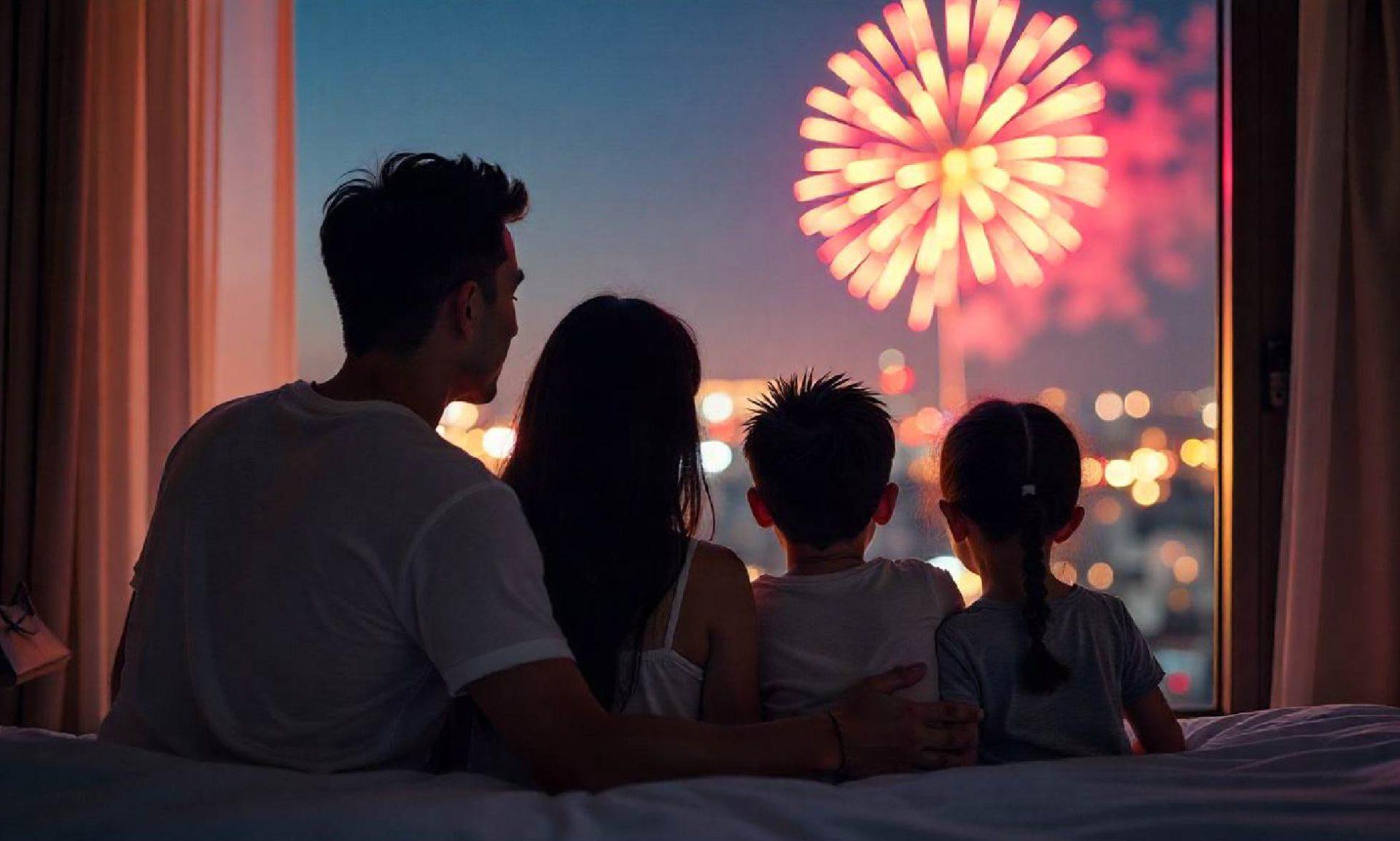
From temple bells in Kyoto to sky lanterns in Chiang Mai, ringing in a new year in Asia is less a single event than a collection of irreplaceable moments. We've broken down the best of them — city by city — so you can stop scrolling and start booking.
Asia doesn't do New Year's halfway. Whether you want a pyrotechnics spectacle reflected off a harbour skyline, a silent mountain temple at first light, or a beach party that outlasts sunrise — this part of the world delivers every version of it. Below is our on-the-ground guide to celebrating New Year's Eve 2026 and welcoming 2027 across six destinations, with Travelodge Hotels keeping you well-rested and well-placed throughout.
A practical note before we begin: major celebrations fill hotels months in advance. If you're reading this in October or November, book tonight. Minimum stay requirements, surge pricing, and sold-out properties are the norm, not the exception, in the final week of December.
Singapore — The Skyline That Becomes a Light Installation
Singapore's Marina Bay Countdown is one of those events that earns its reputation. The combination of synchronised building projections, floating stage performances on the water, and a midnight fireworks display that illuminates the entire financial district is, frankly, difficult to top in Southeast Asia. Arrive at the waterfront by 9pm if you want a proper sightline — by 10:30pm the promenade is a wall of people.
Orchard Road runs its own version of December festivity: the Christmas light installation stays up through New Year's, and the sheer scale of it — kilometres of custom LED canopy work stretching from Tanglin to Plaza Singapura — makes for the best pre-midnight walk in the city. It's popular with families and gives you a natural route from dinner to countdown without once touching a taxi queue.
For those who find Marina Bay too structured, Siloso Beach on Sentosa runs Singapore's only shoreside countdown party. It's louder, looser, and decidedly younger in crowd — expect live DJs, beach-bar queues, and fireworks viewed over the sea rather than glass towers. Neither choice is wrong; they're just different New Year's.
What to Plan For
Marina Bay Countdown: Free public access — no ticket needed. Stake your spot along the Esplanade waterfront or the Helix Bridge before 10pm. The elevated sections of Jubilee Bridge offer some of the cleanest sightlines.
Orchard Road lights: Best walked from Ion Orchard toward Tanglin, where the display is densest. Pair with a coffee stop at one of the Somerset cafés before the crowds arrive.
Siloso Beach Party: Ticketed event — pre-purchase online. Grab your tickets by mid-December as walk-up entry is rarely available.
Getting back: MRT runs extended hours on New Year's Eve. The last train from Bayfront is typically around 2am; check SMRT's published schedule for exact 2026/27 timings closer to the date.
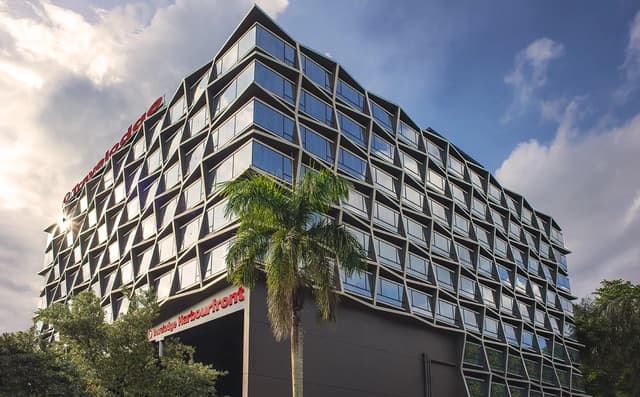
Stay: Travelodge Harbourfront sits minutes from the celebrations and within walking distance of VivoCity, where the Sentosa Cable Car picks up. It's one of the most strategically placed options in the city for New Year's Eve.
Malaysia — Three Cities, Three Entirely Different New Year's
Kuala Lumpur
The Petronas Twin Towers at midnight on New Year's Eve is one of the great urban spectacles in Asia. KLCC Park fills with tens of thousands of people, necks craned upward, watching fireworks burst directly above what were once the world's tallest buildings. It's unapologetically grand, and it works.
The energy shifts entirely when you move a kilometre south to Bukit Bintang. Here the street party mentality takes over: open-air stages, hawker stalls selling char kuey teow and satay alongside craft beers, and crowds spilling from Changkat's bars onto the pavements. It's messier, warmer, and considerably more fun if you prefer to actually talk to someone rather than stare at the sky.
KLCC Park: Free entry but the park fills by 9pm. Take the LRT to KLCC station rather than driving — parking anywhere in the Golden Triangle on New Year's Eve is a lost cause.
Bukit Bintang: The Jalan Alor stretch is the food anchor; Changkat Bukit Bintang runs the bar strip. Walk between them; it's five minutes on foot.
Practical note: Malaysia requires no visa for most passport holders for stays under 30–90 days. Check your specific nationality at imigresen.gov.my ahead of travel.
Stay: Travelodge Chinatown Kuala Lumpur puts you in the historic core, walking distance from both Merdeka Square and Petaling Street — ideal for soaking up the city before it fully wakes up on New Year's Day.
Penang
If KL's countdown feels too frantic, Penang's pace on New Year's Eve is a revelation. Gurney Drive, the coastal promenade facing the Straits of Malacca, hosts a relaxed celebration built around food stalls, live music, and fireworks over the water. There's no crush, no countdown clock you can't see, and the seafood — Penang hokkien mee, freshly grilled sotong, cendol to finish — is reason enough to be here regardless of the date.
New Year's Day is when Penang reveals its more contemplative side. Kek Lok Si Temple, the largest Buddhist temple in Malaysia, opens its pagodas and terraced gardens to visitors seeking blessings for the coming year. The illuminated structures at dusk are extraordinary; if you can arrange to be there at that hour, do it.
Gurney Drive: Arrive by 9pm for a comfortable spot near the water. Street food vendors set up from late afternoon.
Kek Lok Si: Open from early morning on New Year's Day. The funicular to the pagoda summit involves a small entry fee; bring cash in Malaysian ringgit.
Getting around: Penang's Rapid Penang buses cover the island, but the easiest option for New Year's Eve is Grab — book your return well before midnight to avoid surge pricing.
Stay: Travelodge Georgetown is within the UNESCO World Heritage Zone, which means colonial shophouses and excellent coffee are your morning view. Both Gurney Drive and the temple are straightforward rides from here.
Ipoh
Ipoh doesn't stage a fireworks show. That's not a criticism — it's the point. This is where you come if the idea of sharing a midnight countdown with 80,000 strangers sounds exhausting. The city instead offers some of the best food in Malaysia (the white coffee and bean sprout chicken here are not hype), a charming old town that rewards slow walking, and easy access to the Cameron Highlands for those who want a full day's escape into tea country before the new year arrives.
Ipoh Old Town: Han Chin Pet Soo museum and the heritage murals along Jalan Panglima are excellent anchors for a half-day wander.
Cameron Highlands day trip: About 1.5 hours by car. The BOH Sungei Palas tea plantation is open to visitors (check hours in advance); the strawberry farms nearby are worth a stop.
Temple visits: Perak Tong cave temple, carved into a limestone cliff, is atmospheric and free to enter.
Stay: Travelodge Ipoh sits close to the train station and old town, making it a practical base whether you're heading up to the highlands or staying put for a slower celebration.
Thailand — Four Cities, Each a Completely Different Thailand
Bangkok
Bangkok's premier New Year's Eve event is the Iconsiam riverside countdown along the Chao Phraya. The combination of fireworks bursting over the river, the glittering Asiatique skyline in the distance, and the sheer organisational scale of the thing — thousands of floating lanterns, coordinated light shows across the water — makes it genuinely spectacular. The street food and night market running alongside the event are not an afterthought; they're half the reason to go.
On New Year's Day, the shift is complete. Bangkok wakes up quieter, and the temples take over. Wat Arun, the Temple of Dawn, is best visited in the morning when the light hits its porcelain-encrusted spires at an oblique angle. Wat Pho, directly across the river, is larger and worth at least two hours. Both are walkable from each other via the cross-river ferry — a three-baht ride.
Iconsiam countdown: The mall's riverside terrace has some of the best views. BTS to Saphan Taksin, then a free shuttle boat to the venue.
Wat Arun / Wat Pho: Opening hours run from 8am. Entry fees are payable in Thai baht; expect 100–200 THB per temple.
Visa note: Thailand offers visa-free entry for most nationalities for 30–60 days. Check the latest rules at thaiembassy.org for your passport.
Stay: Travelodge Sukhumvit gives you BTS Skytrain access, which is the most reliable way to navigate Bangkok on New Year's Eve when taxis become an exercise in optimism.
Phuket
Patong Beach on New Year's Eve is organised chaos in the best sense. The beach itself hosts a legitimate fireworks display at midnight — far better than you'd expect from a commercial resort strip — and the promenade runs with street food stalls, live stages, and revellers of roughly forty nationalities all simultaneously having a good time. It is not peaceful. It is, however, memorable.
For contrast, spend the afternoon before in Phuket Old Town, where the Sino-Portuguese shophouses and independent cafés form a genuinely photogenic neighbourhood that has nothing to do with beach tourism. It's fifteen minutes by scooter or Grab from Patong and feels like another island entirely.
Patong Beach countdown: The main fireworks launch from the beach directly. Standing in the shallow water at midnight — warm sea, fireworks overhead — is one of those experiences that requires no Instagram filter.
Phuket Old Town: Thalang Road and Soi Romanee are the core streets. Blue Elephant restaurant (higher budget) and Kopitiam by Wilai (local and reasonable) are both dependable.
Practical note: Grab works reliably in Phuket. Negotiate any non-Grab tuk-tuk fare before you get in.
Stay: Travelodge Phuket Town keeps you out of the Patong resort-price bubble while remaining an easy ride from the beach celebrations.
Pattaya
Pattaya's Walking Street countdown is Thailand's most unapologetically high-octane New Year's Eve. The fireworks display launched from the waterfront is genuinely impressive — one of the larger non-Bangkok shows in the country — and the street itself operates like a moving party from sundown onwards. It's not for everyone, but if you want energy without planning, Pattaya delivers it.
Walking Street: Best approached on foot once the main road closes to vehicles in the evening. Secure a beachfront table at a restaurant before 8pm if you want to eat with a view.
New Year's Day temples: Sanctuary of Truth (Prasat Satchatham) is Pattaya's most impressive religious site — an entirely wood-carved structure built without a single nail, still under construction since 1981.
Stay: Travelodge Pattaya is within reach of the beachfront action without placing you directly inside the Walking Street noise zone.
Chiang Mai
Of all the New Year's experiences in Thailand, Chiang Mai's is the one people describe most vividly years later. The release of khom loi — the traditional paper lanterns — near Tha Phae Gate and the Ping River creates a scene that photographs cannot adequately capture. The lanterns ascend slowly, trailing light, until the entire sky is filled with moving embers. It is, objectively, one of the most beautiful things you can witness in Southeast Asia.
New Year's Day in Chiang Mai belongs to the mountain. Doi Suthep temple, perched at 1,080 metres above the city, draws visitors for the first sunrise of the year. The drive up begins in darkness; arriving before dawn to watch the light spread across the valley below is worth every minute of the early alarm.
Lantern release: Lanterns (khom loi) are sold at market stalls around the old city moat from around 100 THB. Check with your accommodation about any local restrictions on release zones before the event.
Doi Suthep sunrise: Songthaew (shared red truck taxis) depart from near Chiang Mai Zoo from around 5am on New Year's Day. Book the return trip before you ascend.
Nimman area: Nimmanhaemin Road and the One Nimman complex host a strong selection of countdown events for those who prefer a bar-and-stage New Year over the riverside lantern scene.
Stay: Travelodge Nimman places you in the trendiest neighbourhood in the city — close to the lantern release sites and a straightforward ride to the mountain road.
Japan — The Country Where New Year's Is the Most Important Holiday of the Year
Japan doesn't celebrate New Year's Eve — it observes it. The distinction matters. Shōgatsu, the Japanese New Year, is rooted in family, reflection, and ritual rather than parties and pyrotechnics. If you arrive expecting a Western countdown, you'll be pleasantly confused. If you arrive understanding what Omisoka actually is — the final night of the year, the quiet culmination of 12 months — the experience is singular.
The centrepiece ritual is Joya no Kane: Buddhist temples ring their bells 108 times at midnight, each toll purifying one of the earthly desires that cloud human judgement. The sound of a large temple bell in winter air, with incense smoke rising and snow falling in the better years, is not easily forgotten. On New Year's Day, Hatsumode begins — the first shrine or temple visit of the year — and entire cities move, together and quietly, toward the sacred sites.
Osaka
Sumiyoshi Taisha, one of Japan's oldest shrines, performs Joya no Kane in a setting that has changed little over centuries. The ceremony draws large local crowds who come not to perform for cameras but to participate — a meaningful distinction. Dotonbori canal offers the festive lights and street food energy for those who want a more commercial New Year's atmosphere; the two are genuinely complementary stops on the same evening.
Sumiyoshi Taisha: Take the Nankai Main Line to Sumiyoshi Taisha station. Expect queues from 11pm — bring layers; December in Osaka is cold.
Dotonbori illuminations: Walk the canal from Shinsaibashi to Namba. The Glico Man sign is the landmark; the actual illuminations extend well beyond it in both directions.
Visa: Japan requires no visa for most Western and Southeast Asian passport holders for stays under 90 days. Check mofa.go.jp for your specific nationality.
Stay: Travelodge Honmachi Osaka is well-placed for both the Dotonbori entertainment district and the subway lines that fan out to Osaka's shrine and temple sites.
Kyoto
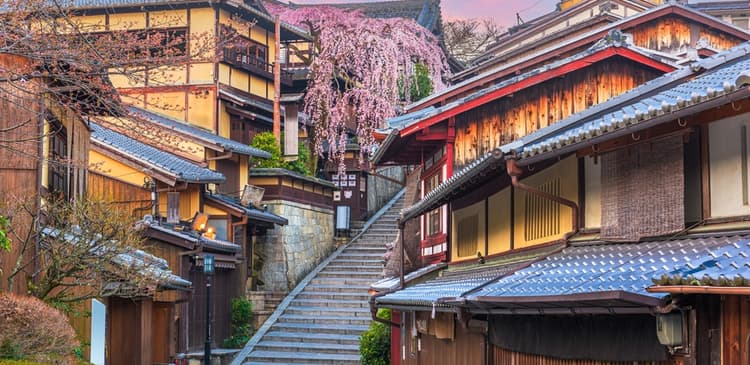
Kyoto's New Year is the most atmospheric in Japan, which is saying something. The temples and shrines — Fushimi Inari Taisha with its thousands of vermillion torii gates, Kiyomizudera balanced on its ancient wooden pillars above the eastern hills — are at their most alive during Hatsumode. Buying an omamori (a small embroidered good-luck charm) is less a tourist transaction than a genuine ritual here; people carry them all year.
Fushimi Inari on New Year's Day before 8am is one of the finest walks in Japan. The crowds that plague the gates during daylight haven't arrived yet; the incense from the inner shrines drifts through the cedar trees; and the path through the mountain takes you progressively away from the city into something that feels genuinely ancient.
Fushimi Inari: Open 24 hours. New Year's Eve / Day access is free but expect very large crowds after 9am. The full summit hike is 4km and takes 2–3 hours.
Kiyomizudera: Special Hatsumode hours extend late into the night on New Year's Eve. Confirm dates and times via the official site before you go.
Transport: Kyoto's city buses are the standard option; IC cards (Suica, ICOCA) work across the network. Trains from Osaka to Kyoto take 15 minutes on the Shinkansen, 30 minutes on local lines.
Stay: Both Travelodge Kyoto Shijo Kawaramachi and Travelodge Kyoto Shijo Omiya are on the Shijo corridor — walking distance from the covered Nishiki Market and a short ride to all major shrine sites.
Sapporo
Sapporo's New Year's Eve is cold in the most photogenic way possible. The Odori Park White Illumination transforms the park's mile-long spine into a corridor of snow-covered light. It's Japan's version of what European Christmas markets aspire to be. The temperature in late December routinely drops to −5°C or below, so dress for it; the reward is a city that looks like it was designed to be photographed in winter.
Odori Park illumination: Free and outdoors. Walk the full length of the park from Odori Station west — the installations change each section. Hot buttered corn and soup curry from park vendors are non-negotiable.
Hokkaido Jingu: Take the subway to Maruyama Koen station. The 1 January crowds are enormous; 2–3 January is significantly calmer if flexibility allows.
Practical note: Sapporo's subway and trams handle the New Year's crowd well. Avoid taxis on 1 January morning — demand far exceeds supply.
Stay: Travelodge Sapporo Susukino is in the entertainment district, within walking distance of Odori Park and the subway hub at Susukino station.
Nagoya
Atsuta Jingu Shrine in Nagoya is among the most venerated in all of Japan, said to house the Kusanagi-no-Tsurugi — one of the three Imperial Regalia. Hatsumode here draws over 2 million visitors in the first three days of January, which gives you some sense of the cultural weight this site carries. Arriving on New Year's morning, with the smell of incense and the sound of shakuhachi flutes from the inner precincts, is an experience that has nothing to do with tourism.
Osu Shopping Street and Osu Kannon Temple form a more commercial but equally enjoyable counterpart — the temple's Joya no Kane bell-ringing on New Year's Eve is a public event, and the surrounding market stalls offer miso-marinated street food that Nagoya is rightly proud of.
Atsuta Jingu: Open from 5am on New Year's Day. Meijo subway line to Jingumae station. Queues for the inner shrine extend for hours on 1 January; 2nd or 3rd January visits are less crowded.
Osu Kannon: The bell-ringing ceremony on 31 December is open to public participation. The surrounding Osu shopping arcade stays lively through midnight.
Food note: Miso katsu and hitsumabushi (grilled eel over rice, eaten three ways) are Nagoya's signature dishes — both worth a deliberate meal rather than a rushed stop.
Stay: Travelodge Nagoya Sakae sits in the Sakae entertainment district, the city's commercial centre, with subway access to both Atsuta Jingu and Osu Kannon.
Korea — Where Ancient Ritual Meets Midnight Spectacle
Seoul
Seoul's Bosingak bell-ringing ceremony at midnight on New Year's Eve is one of the most distinctive countdown moments in Asia. The Bosingak Pavilion in Jongno rings its bell 33 times on New Year's Eve — a number drawn from the 33 Buddhist heavens. The surrounding Gwanghwamun Square fills with crowds, live performances, and projection mapping across the facades of the government buildings that flank it. It is simultaneously very Korean and very modern, which describes Seoul fairly well in general.
Lotte World Tower in Jamsil offers a different vantage point: the fireworks display launched from its 555-metre peak is visible from a wide arc of the city, and the organised countdown event in the plaza below draws significant crowds who prefer a slightly less dense setting than Gwanghwamun.
Bosingak ceremony: Jongno 3-ga subway station is the access point. Be there by 10:30pm at the latest — crowd control restricts entry to the immediate area from 11pm.
Tteokguk (rice cake soup): Eating this on New Year's Day is a Korean tradition that means you have officially aged one year. Every Korean restaurant will serve it on 1 January.
Visa note: Korea operates a K-ETA system for visa-free nationalities. Apply at k-eta.go.kr at least 72 hours before departure.
Transport: Seoul Metro runs extended service on New Year's Eve. The system covers all major celebration points.
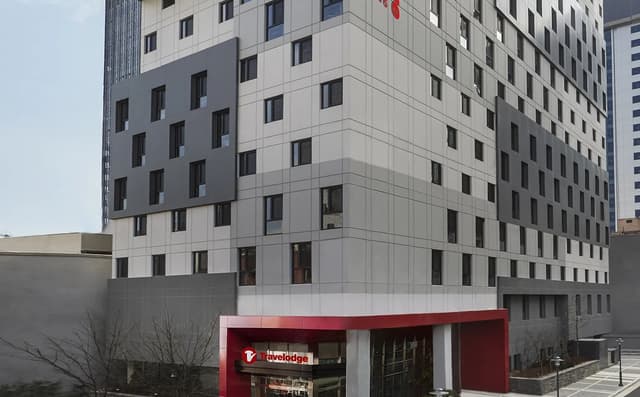
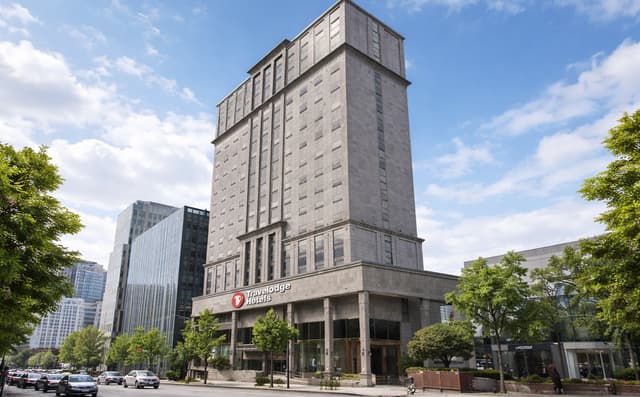
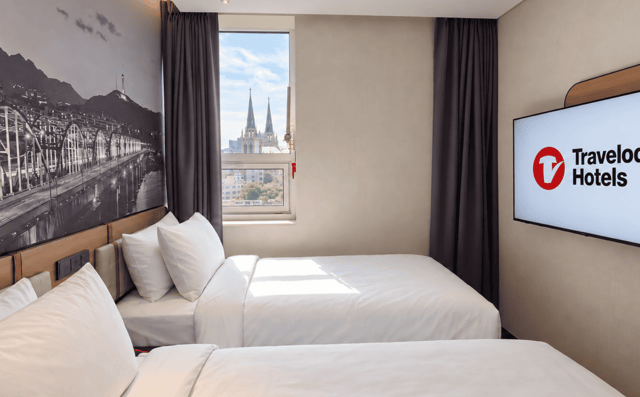
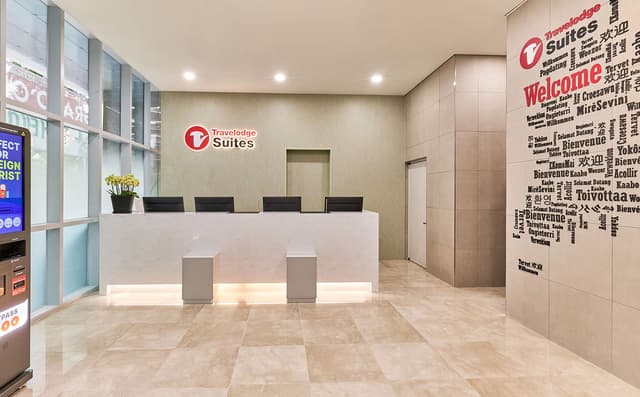
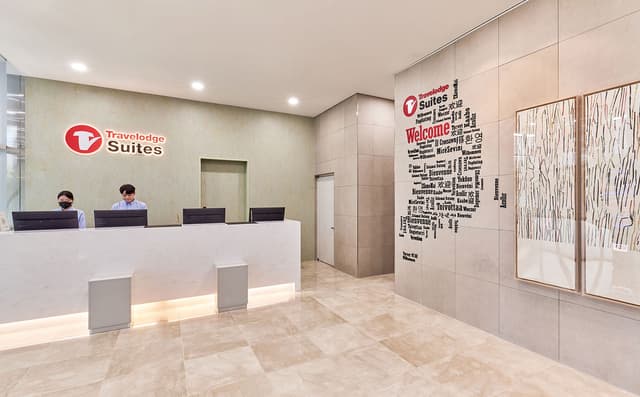
Stay: Travelodge has four Seoul properties that put you in the heart of things — Dongdaemun, Myeongdong City Hall, Myeongdong Euljiro, and Myeongdong Namsan. All sit within walking distance or one metro stop of Gwanghwamun and the Myeongdong entertainment corridor.
Busan
Busan does New Year's differently from Seoul, and that's the appeal. The city's Haeundae Beach First Sunrise event — Haetmaji Festival — draws locals who have been doing this for generations: gathering on the sand in the dark, waiting, watching the horizon. When the first light of 2027 breaks over the East Sea at around 7:30am, the collective exhale of thousands of people simultaneously experiencing the same moment is something that cannot be engineered at a countdown party.
Beomeosa Temple, in the mountains north of the city, offers meditation ceremonies and bell-ringing events on New Year's morning for those who want something more contemplative than a beach gathering.
Haeundae sunrise: Subway line 2 to Haeundae station. Arrive by 6:30am; sunrise in Busan on 1 January is typically around 7:31am. Dress in full winter layers — December temperatures sit at 4–8°C and the sea wind cuts.
Beomeosa Temple: Take bus 90 from Oncheonjang subway station. The mountain setting adds to the atmosphere; the trail from the bus stop to the main gate is short but uphill.
New Year's Eve itself: Busan's BIFF Square and Seomyeon district host countdown events. Lower key than Seoul, which is precisely the point for many visitors.
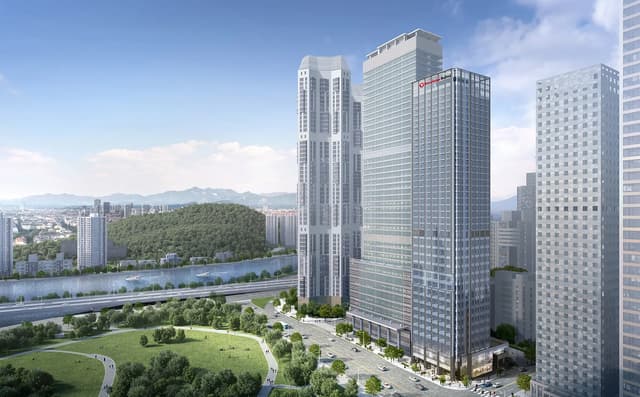
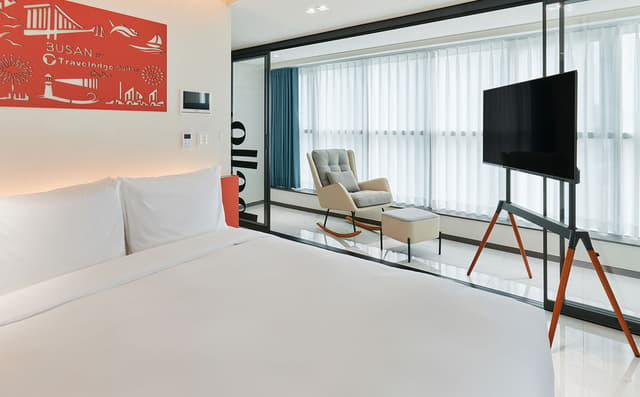
Stay: Travelodge Suites Busan Centum is positioned in the Centum City district, with easy access to the Haeundae beach area and the BIFF Square entertainment zone.
Hong Kong — The Harbour That Turns the Whole City Into a Stage
Victoria Harbour on New Year's Eve is a show. Not a metaphor — an actual production, with coordinated fireworks launched from multiple barges across the water, building-mounted LED displays across the entire Kowloon and Central waterfronts firing in synchronisation, and a finale timed to the stroke of midnight that lights the entire sky from Causeway Bay to Tsim Sha Tsui.
The best free viewing position is the Tsim Sha Tsui Promenade on the Kowloon side — you face the fireworks head-on over the water with the Central skyline behind them. The Avenue of Stars, running alongside, is popular but fills extremely early; by 8pm it's standing-only from end to end. Arrive by 7pm and bring something to stand on.
Lan Kwai Fong on Hong Kong Island is the late-night counterpart: an entire neighbourhood of bars and clubs that operate as a de-facto outdoor party from 10pm through to well past 2am. It is expensive, crowded, and excellent if that's the mode you're in.
Victoria Harbour fireworks: Best viewed from the Tsim Sha Tsui waterfront. Take the MTR to Tsim Sha Tsui station and walk south to the promenade.
Lan Kwai Fong: Central MTR station, exit D2. Many venues charge entry on New Year's Eve — check ahead if you have a specific bar in mind.
Practical note: Hong Kong is visa-free for most passport holders for 14–90 days depending on nationality. The MTR runs extended hours on New Year's Eve; check hkmtr.com.hk for the specific 2026/27 schedule.
Getting there: High-speed rail from Guangzhou or Shenzhen reaches Hong Kong West Kowloon station in 14–48 minutes respectively — a practical option if you're combining cities on the mainland.
Stay: Travelodge Kowloon is on the right side of the harbour — literally. The Tsim Sha Tsui promenade and the MTR are both walkable, which matters enormously when you're trying to get back from a midnight fireworks crowd.
One Last Thing Before You Book
Every destination on this list will be busier on New Year's Eve than at any other point in the year. That's not a discouragement — it's a prompt to move quickly. Hotel availability in Singapore, Tokyo, and Seoul over the Christmas–New Year period is already constrained by late September. Bangkok and Chiang Mai are close behind.
Book your Travelodge property directly to avoid third-party surcharges, and check whether your chosen city operates a minimum-stay policy over the New Year period — many properties require a three-night minimum from 30 December. Travel insurance that covers trip disruption is worth the cost on a trip like this.
However you spend 31 December 2026: may the first sunrise of 2027 be exactly what you needed it to be.
All travel and visa information is accurate as of November 2026. Confirm entry requirements for your nationality before departure. Prices, event details, and operational hours are subject to change; always verify with official sources or your accommodation ahead of travel.